The Badlands asteroid guide: water, rock and example seeds
AsteroidsHard
How to survive the dry rock world on its few water sources, with three in-game seeds and every geyser located.
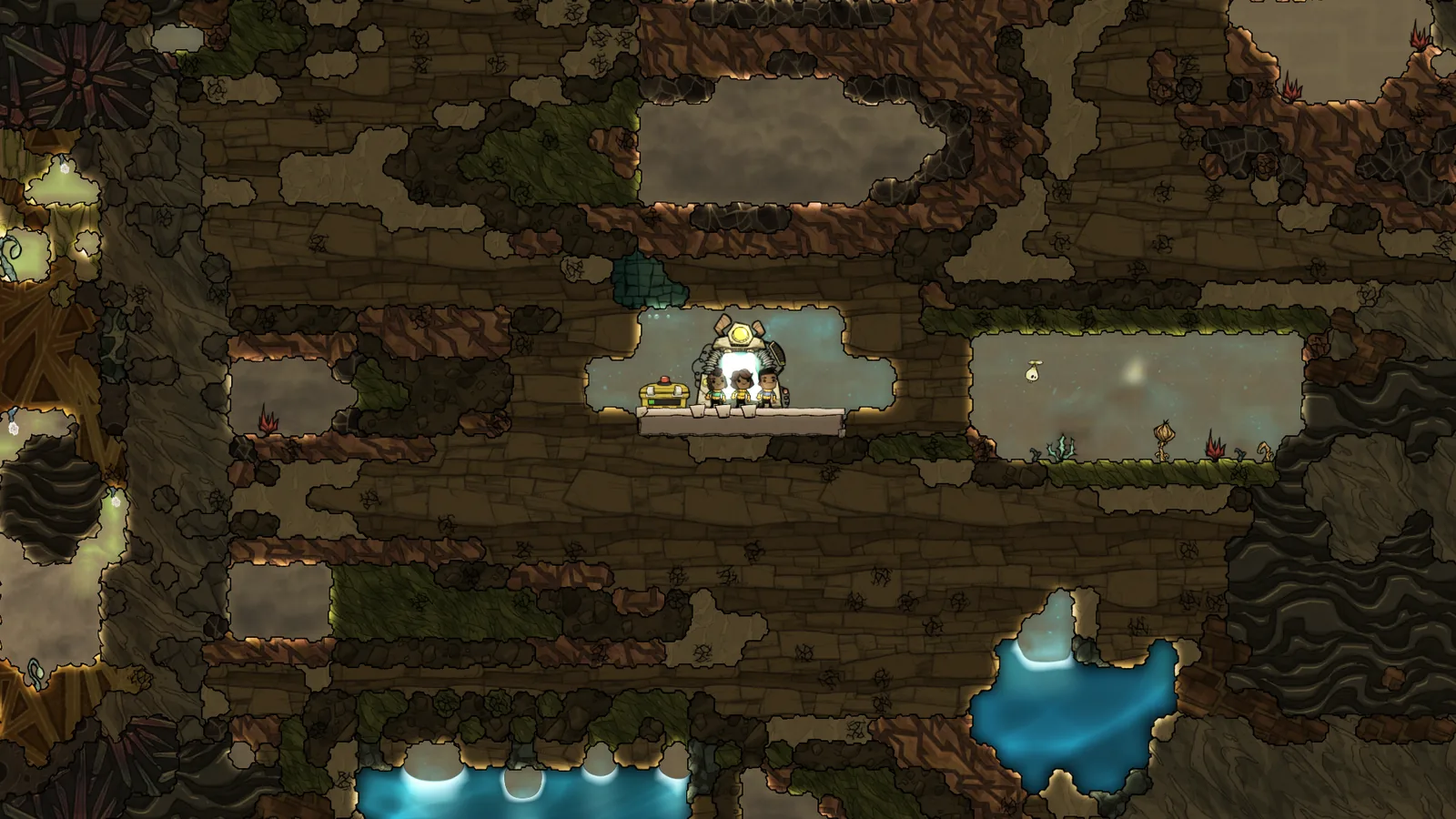
The Badlands is a rock world. The game rates it Marginal: the start is the usual sandstone pocket, but around it the asteroid is mostly granite, igneous and mafic rock with very little liquid. There are no marshes and no oceans, only two or more jungles, three or more tundras, four or more oil fields, a rust biome and a barren granite biome. In the sample seeds below granite alone reaches 26,000 to 32,000 tonnes, while liquid fresh water outside geysers is almost absent.
| Fact | Value |
|---|---|
| Size | Base game: 256 × 384 cells. Spaced Out! Badlands Asteroid: 240 × 380 cells. |
| Survival chance | Marginal |
| Where you find it | Base game cluster The Badlands; Spaced Out! The Badlands Cluster, next to the Radioactive Swamp Asteroid and five outer moonlets. |
| Starting biome | Sandstone: Mealwood, Bristle Blossom, Muckroot, Hatches and Shine Bugs. |
| Other biomes | Two sandstone pockets (one with metal, one with water), jungles, tundras, oil fields, one rust biome, a barren granite biome, the magma core and the surface. |
| World traits | Two to four random traits. |
| Meteor showers | Base game: iron, gold and copper showers. Spaced Out!: copper, ice and slimy showers. |
Strengths
- Solid Iron lies in the ground: about 1,000 to 1,300 tonnes of refined Iron on every sample seed, usable without a refinery.
- Plenty of oil. Four or more oil fields give Crude Oil for petroleum and plastics.
- More than 1,000 tonnes of Regolith and over 26,000 tonnes of granite: building material never runs out.
- Shove Voles (Shove Vole) are common, about 50 per seed. They eat Regolith, Dirt and Iron Ore.
Weaknesses
- Water. There are no oceans or marshes, and the sample seeds hold only a few tonnes of liquid water outside geysers. The first water source decides how fast the colony grows.
- Little algae and few plants: food and oxygen need planning from cycle 1.
- Hard rock slows digging, and the Large Boulders trait makes it slower still.
- World generation can fail for some coordinates: seed BAD-A-2468024-0-0-0 does not generate in the U59 client, and the game reports a generation failure instead of starting the colony.
What to target first
- Cycle 1: Research Station, Outhouse, Oxygen Diffuser on the start algae, and a Mealwood farm.
- Cycle 1 to 5: mark every water pocket in the sandstone and reserve it for the Microbe Musher and the wash basin.
- Cycle 5 to 20: reach the nearest steam vent, water geyser or slush geyser. On the Badlands this is the single most important target.
- Cycle 10 to 30: an Electrolyzer on that water, and a Water Sieve on the toilet water so no water leaves the base.
- Cycle 20 to 40: ranch Hatch on the sand and sandstone you dig out for coal, and use the oil fields for a Petroleum Generator later. Hatches do not eat granite or igneous rock.
Surviving the Badlands
Recycle every drop. Toilets return polluted water, the water purifier cleans it, and the colony needs only a small inflow on top. Choose a steam vent or water geyser as the base's anchor early, even if it means building the base off-centre.
Food is the other limit. Mealwood needs dirt, which is scarce here, so add a crop that runs on what the Badlands has: Bristle Blossom on water and light, or meat from Hatches and Dreckos.
Seed BAD-A-1234567-0-0-0
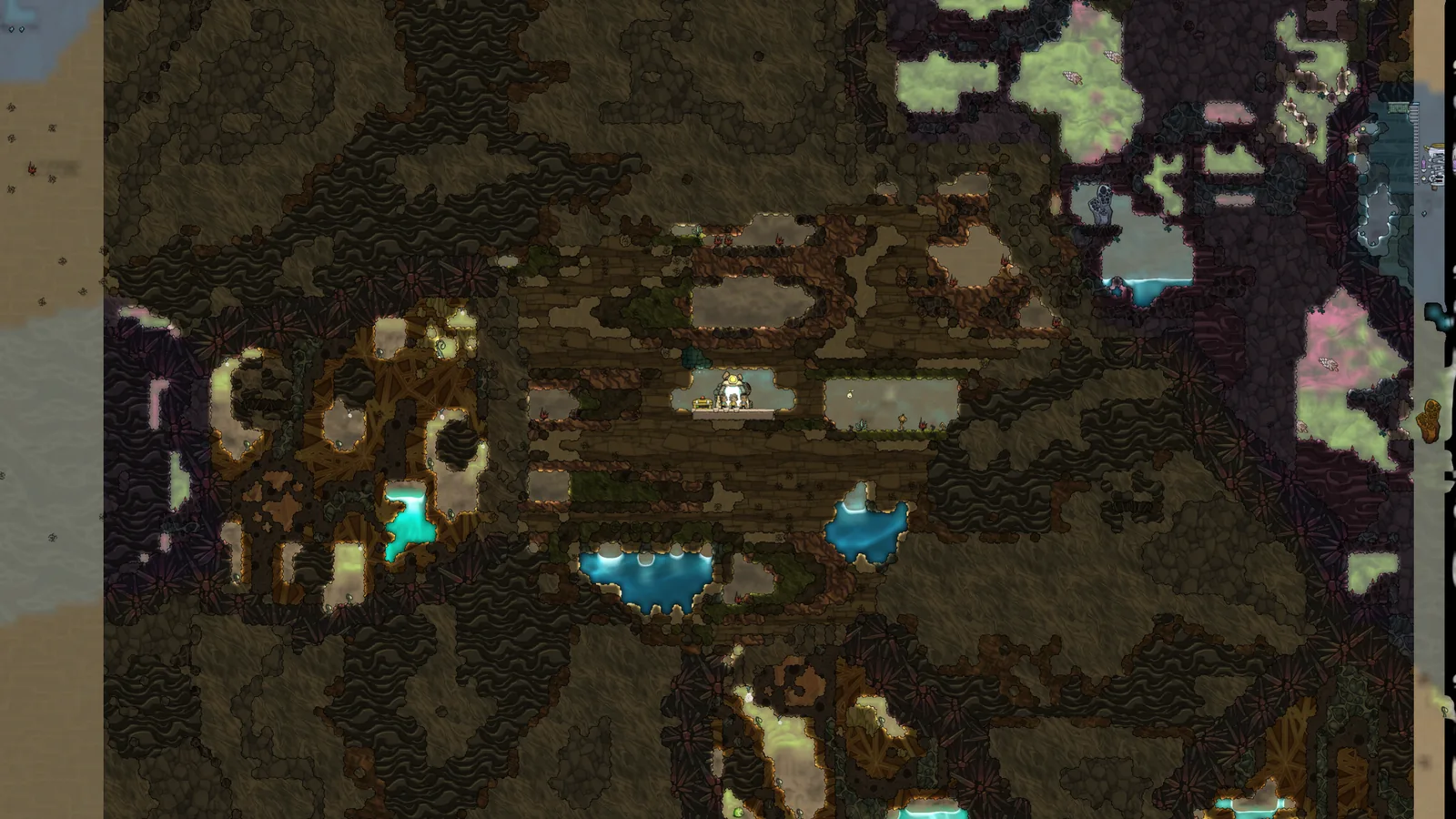
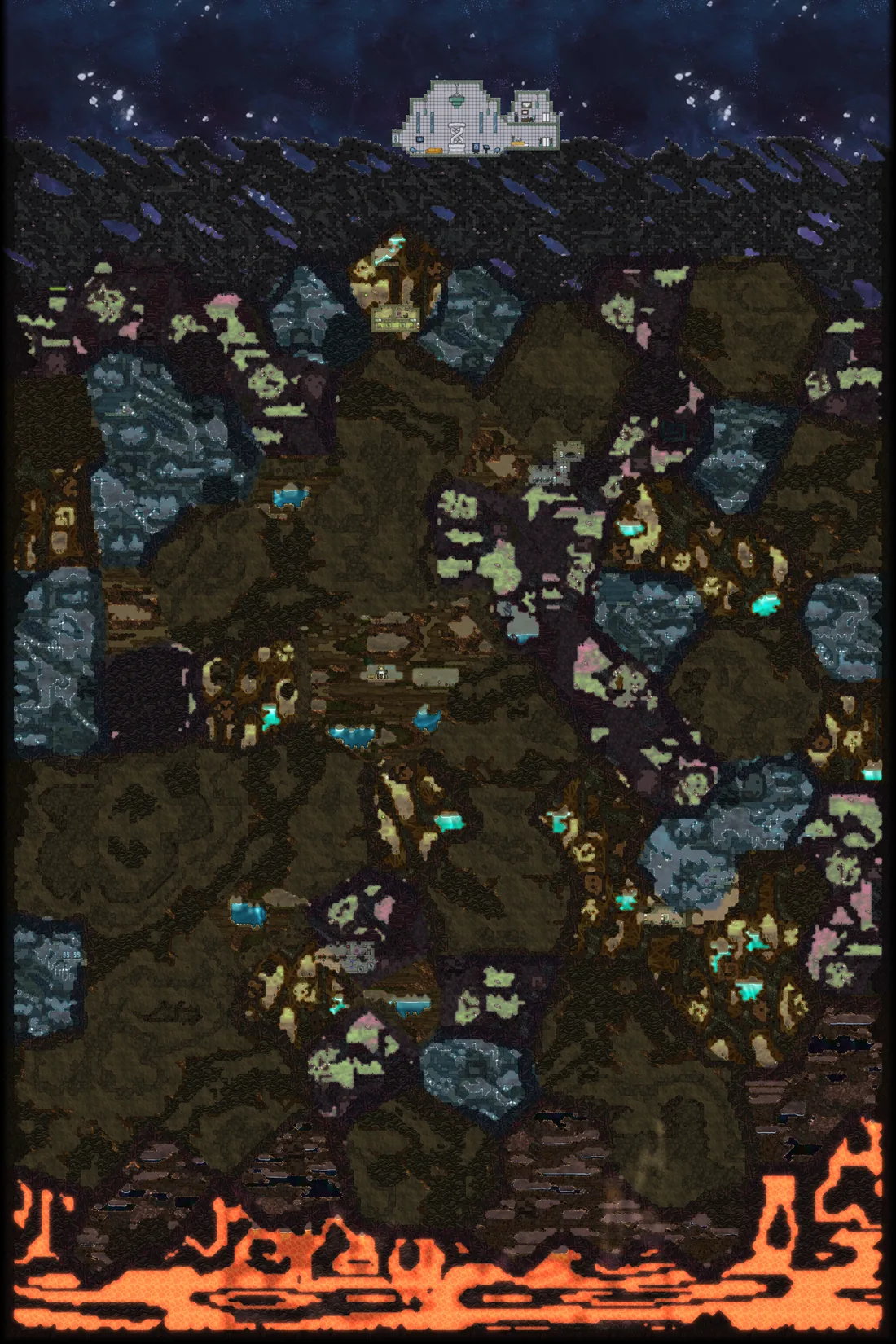
Metal Rich, Trapped Oil, Mixed Boulders and Magma Channels. This is the easy Badlands: a Water Geyser and a Cool Steam Vent both sit 40 cells from the Printing Pod at (147, 181) and (144, 208), together more than 4 kg/s.
A Leaky Oil Fissure 47 cells to the left at (62, 191) gives early crude oil. The Chlorine Gas Vent 68 cells to the right is the vent to keep sealed.
| Geyser | Cell (x, y) | Average output | Temperature |
|---|---|---|---|
| Water Geyser | 147, 181 | 2.81 kg/s | 95 ºC |
| Cool Steam Vent | 144, 208 | 1.57 kg/s | 110 ºC |
| Cool Salt Slush Geyser | 167, 77 | 1.50 kg/s | -10 ºC |
| Cool Steam Vent | 24, 187 | 1.26 kg/s | 110 ºC |
| Volcano | 207, 156 | 1.18 kg/s | 1727 ºC |
| Steam Vent | 129, 107 | 583 g/s | 500 ºC |
| Minor Volcano | 83, 54 | 574 g/s | 1727 ºC |
| Leaky Oil Fissure | 62, 191 | 203 g/s | 327 ºC |
| Carbon Dioxide Geyser | 188, 288 | 149 g/s | -55 ºC |
| Carbon Dioxide Geyser | 149, 38 | 121 g/s | -55 ºC |
| Carbon Dioxide Vent | 199, 235 | 106 g/s | 500 ºC |
| Carbon Dioxide Vent | 57, 266 | 104 g/s | 500 ºC |
| Chlorine Gas Vent | 176, 187 | 103 g/s | 60 ºC |
| Infectious Polluted Oxygen Vent | 41, 288 | 98 g/s | 60 ºC |
Seed BAD-A-31415926-0-0-0
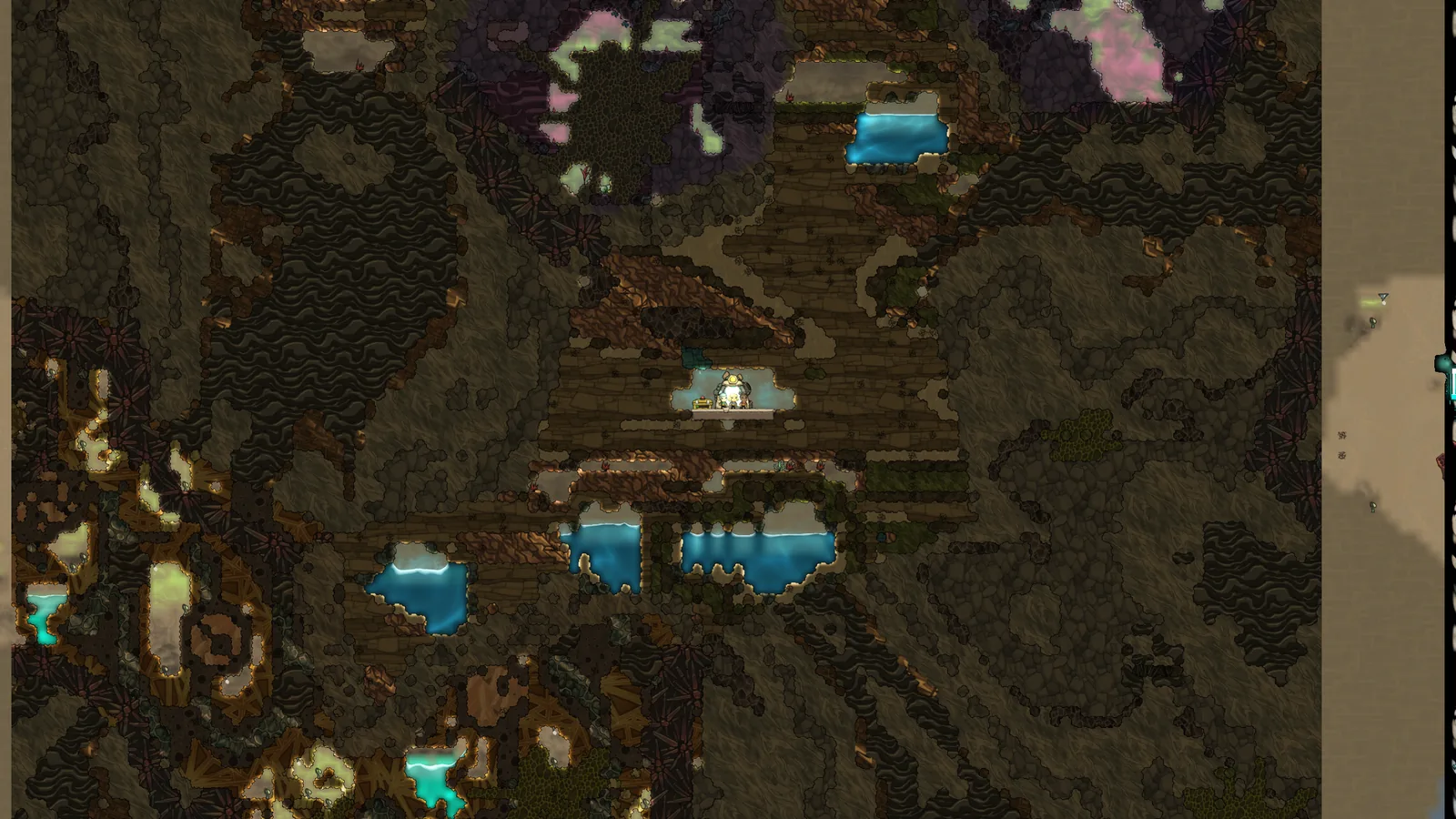
Geodes, Metal Rich, Slime Molds and Frozen Core. A Minor Volcano sits 30 cells directly above the Printing Pod at (117, 246); dig upward carefully.
Water is the problem on this seed. The nearest water vent is a Steam Vent at (158, 191), which gives 500 ºC steam that needs cooling before it is useful; the nearest Cool Steam Vent is 76 cells up. Three Natural Gas Geyser vents within 106 cells cover power.
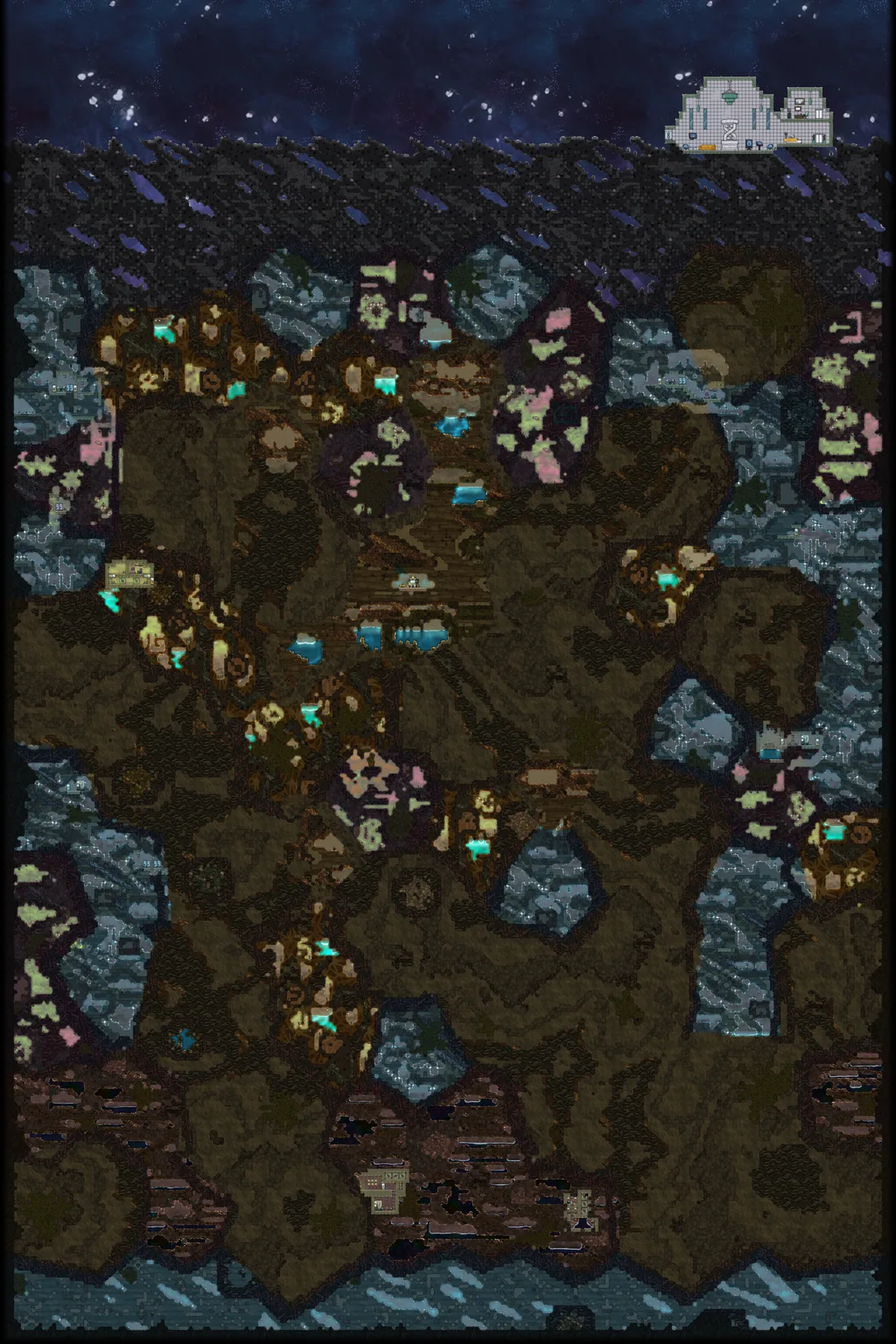
| Geyser | Cell (x, y) | Average output | Temperature |
|---|---|---|---|
| Salt Water Geyser | 136, 47 | 2.84 kg/s | 95 ºC |
| Cool Steam Vent | 119, 292 | 1.44 kg/s | 110 ºC |
| Volcano | 183, 115 | 1.14 kg/s | 1727 ºC |
| Volcano | 82, 105 | 1.10 kg/s | 1727 ºC |
| Minor Volcano | 85, 121 | 625 g/s | 1727 ºC |
| Steam Vent | 158, 191 | 620 g/s | 500 ºC |
| Minor Volcano | 117, 246 | 609 g/s | 1727 ºC |
| Copper Volcano | 48, 67 | 341 g/s | 2227 ºC |
| Hot Polluted Oxygen Vent | 212, 207 | 128 g/s | 500 ºC |
| Natural Gas Geyser | 114, 110 | 127 g/s | 150 ºC |
| Natural Gas Geyser | 105, 165 | 118 g/s | 150 ºC |
| Hot Polluted Oxygen Vent | 187, 209 | 110 g/s | 500 ºC |
| Hot Polluted Oxygen Vent | 232, 97 | 104 g/s | 500 ºC |
| Natural Gas Geyser | 199, 249 | 96 g/s | 150 ºC |
Seed BAD-A-55555-0-0-0
Metal Poor and Large Boulders: the hardest version in this guide, with less ore and slower digging. It still has refined Iron in the ground and a Iron Volcano 88 cells to the right at (206, 186).
The start is gas-rich: a Hydrogen Vent 31 cells up and to the right at (136, 198) and a Natural Gas Geyser 53 cells above the pod. Water comes from the Cool Salt Slush Geyser at (63, 146) and the Cool Slush Geyser at (101, 238), both within 70 cells.
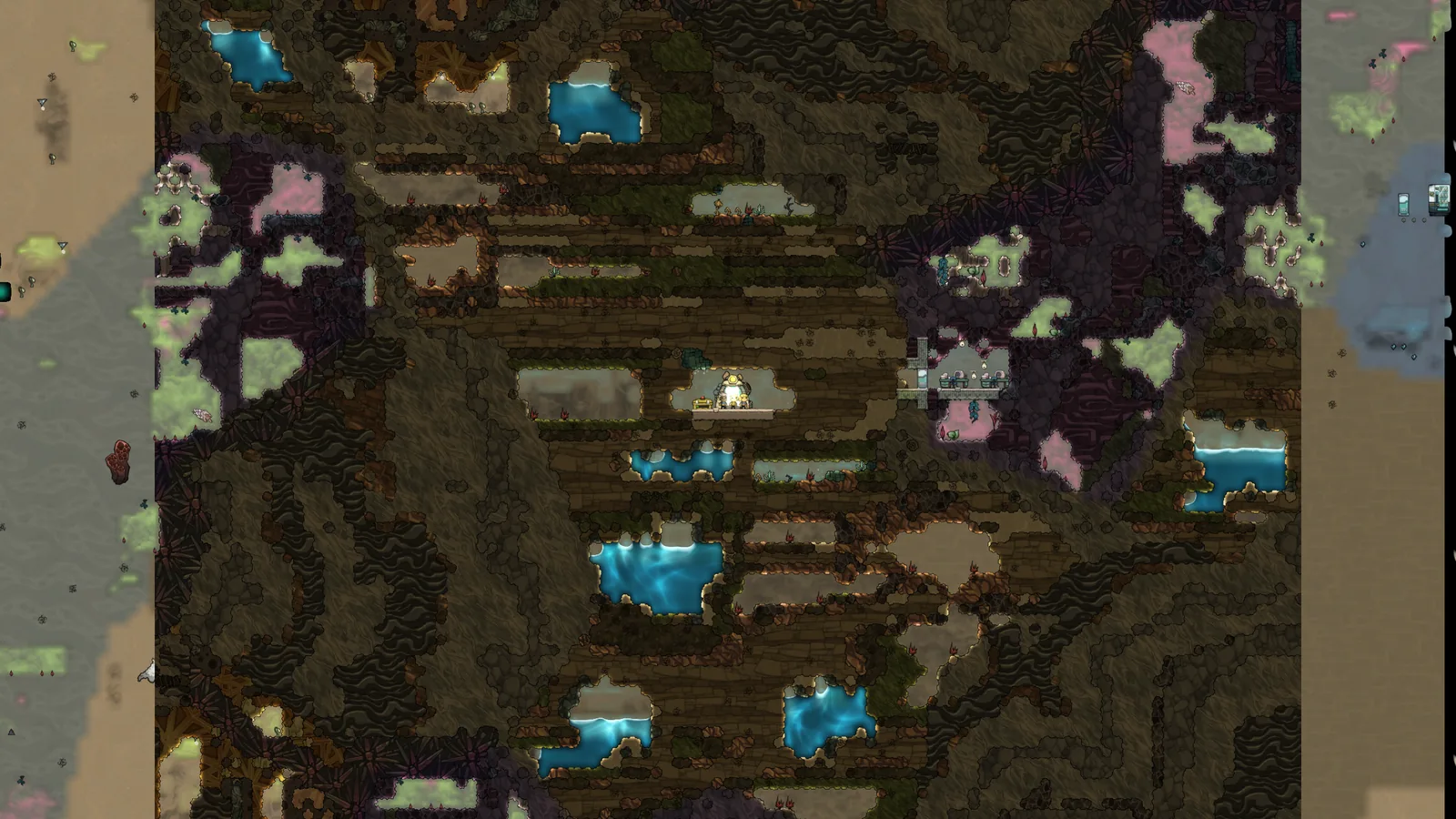
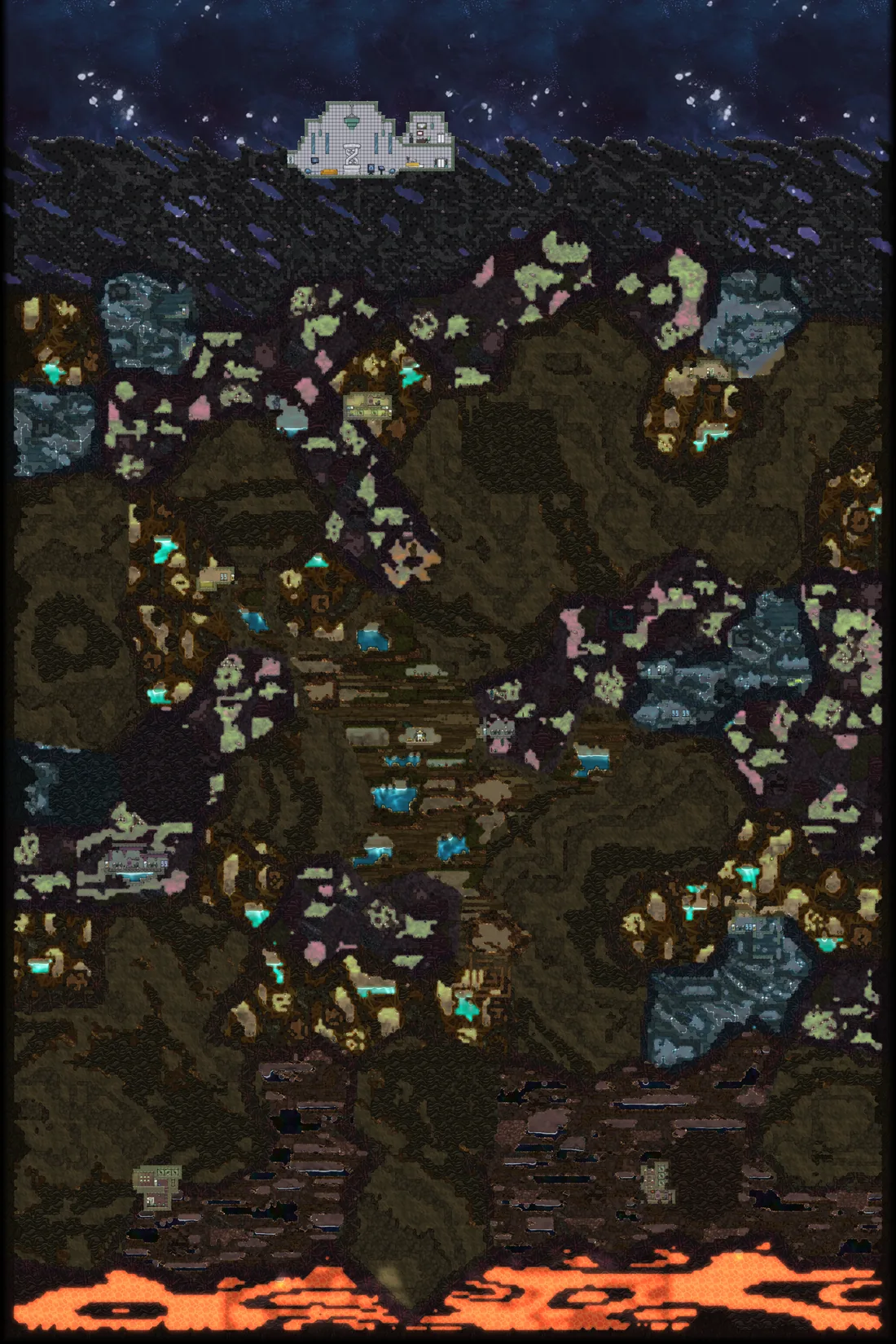
| Geyser | Cell (x, y) | Average output | Temperature |
|---|---|---|---|
| Water Geyser | 221, 160 | 2.66 kg/s | 95 ºC |
| Salt Water Geyser | 50, 29 | 2.63 kg/s | 95 ºC |
| Cool Salt Slush Geyser | 63, 146 | 1.55 kg/s | -10 ºC |
| Cool Slush Geyser | 101, 238 | 1.38 kg/s | -10 ºC |
| Cool Steam Vent | 78, 267 | 1.35 kg/s | 110 ºC |
| Cool Steam Vent | 153, 69 | 1.31 kg/s | 110 ºC |
| Volcano | 194, 111 | 1.08 kg/s | 1727 ºC |
| Steam Vent | 61, 73 | 820 g/s | 500 ºC |
| Steam Vent | 59, 165 | 673 g/s | 500 ºC |
| Iron Volcano | 206, 186 | 328 g/s | 2527 ºC |
| Copper Volcano | 169, 43 | 301 g/s | 2227 ºC |
| Natural Gas Geyser | 117, 225 | 125 g/s | 150 ºC |
| Carbon Dioxide Vent | 234, 54 | 106 g/s | 500 ºC |
| Hydrogen Vent | 136, 198 | 101 g/s | 500 ºC |
Spaced Out! seed V-BAD-C-1234567-0-0-0
The Spaced Out! Badlands Cluster is rated Marginal as well. Its teleporter target, the Radioactive Swamp Asteroid, has the liquids and organic biomes the rock world lacks. Read the Radioactive Swamp Asteroid guide before the first teleport.
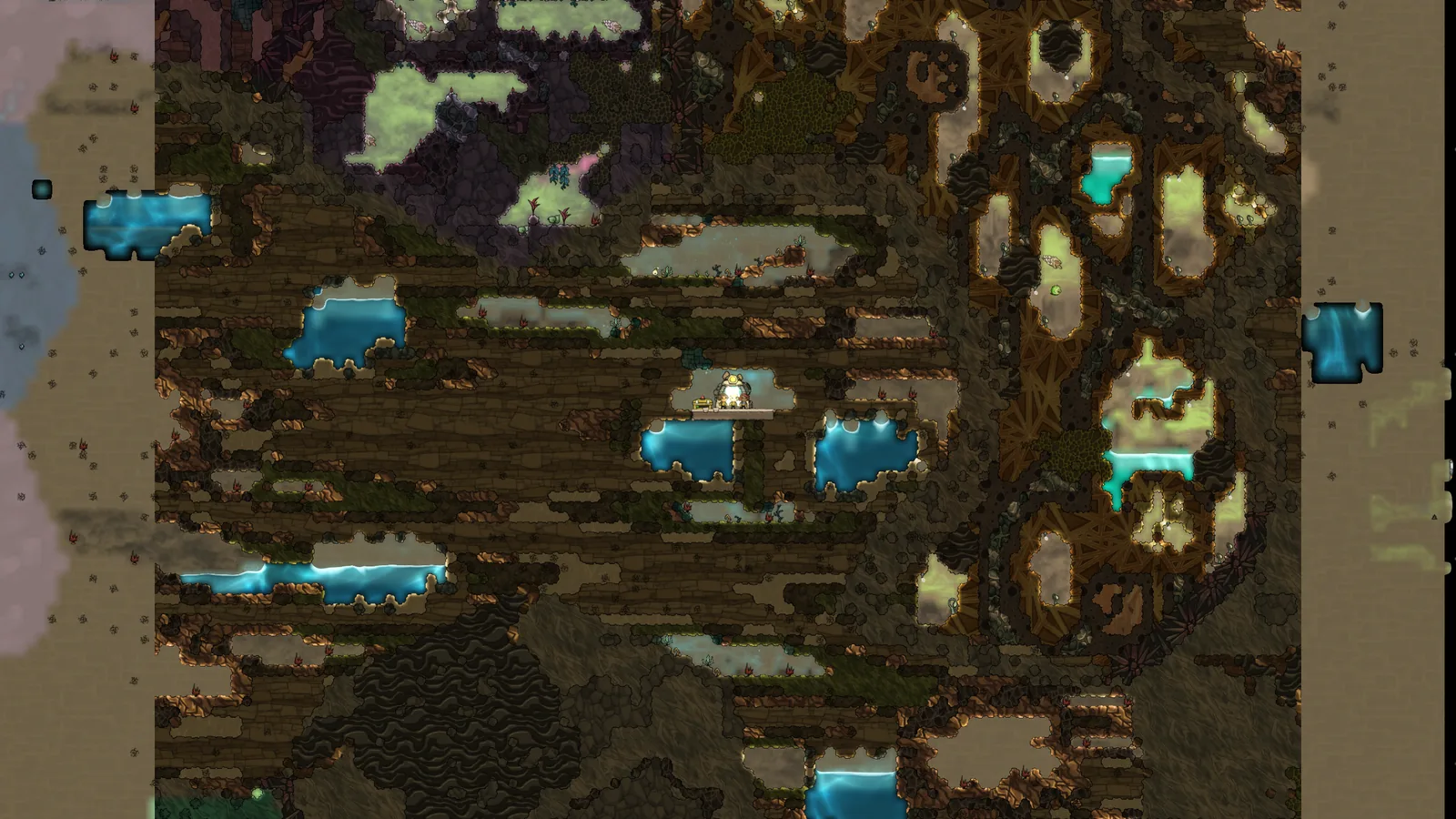
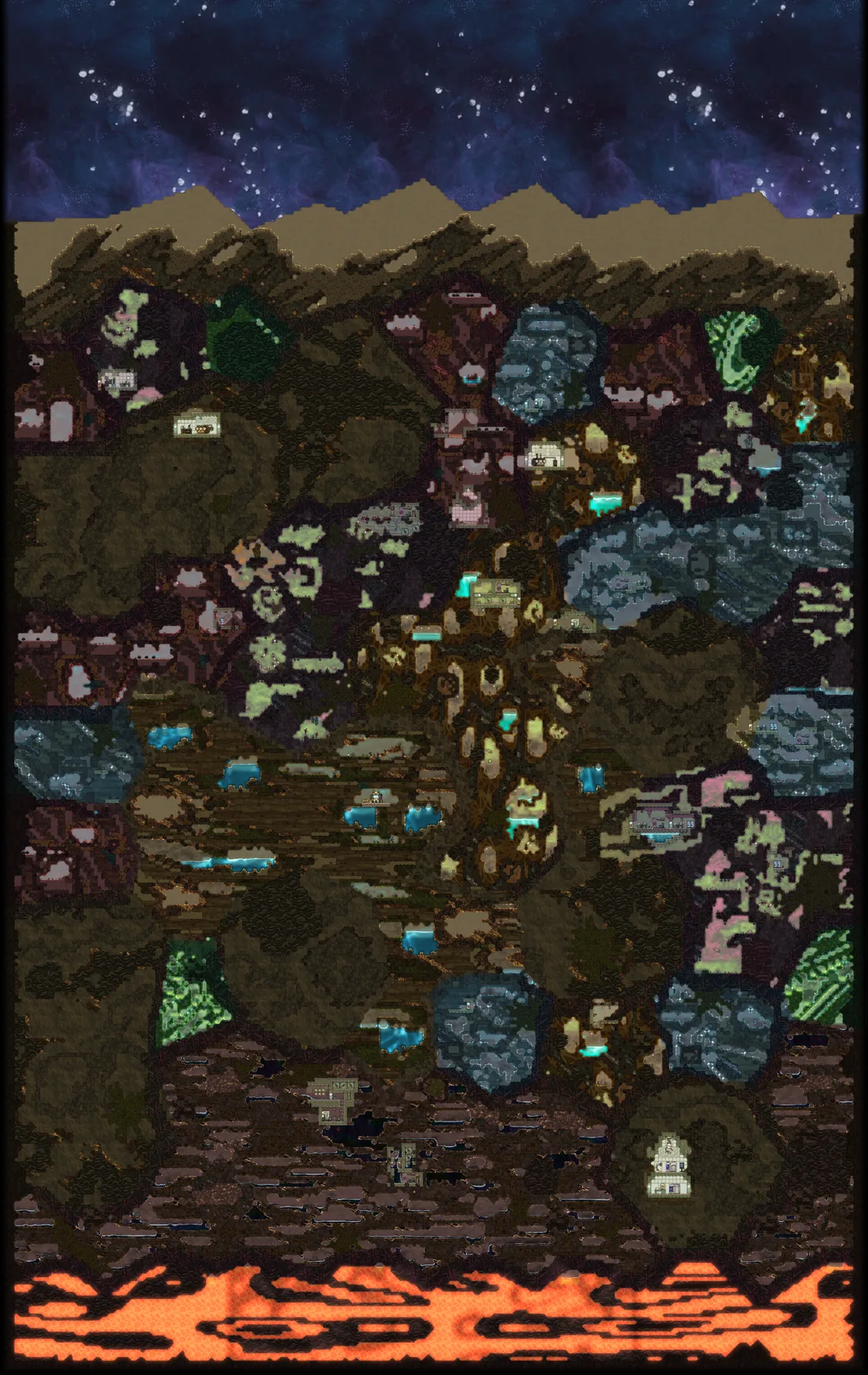
| Geyser | Cell (x, y) | Average output | Temperature |
|---|---|---|---|
| Water Geyser | 53, 111 | 2.87 kg/s | 95 ºC |
| Water Geyser | 211, 41 | 2.63 kg/s | 95 ºC |
| Liquid Sulfur Geyser | 25, 43 | 1.75 kg/s | 165 ºC |
| Liquid Sulfur Geyser | 221, 48 | 1.65 kg/s | 165 ºC |
| Cool Steam Vent | 206, 256 | 1.56 kg/s | 110 ºC |
| Minor Volcano | 153, 42 | 617 g/s | 1727 ºC |
| Cobalt Volcano | 204, 61 | 326 g/s | 2227 ºC |
| Leaky Oil Fissure | 107, 206 | 162 g/s | 327 ºC |
| Carbon Dioxide Geyser | 222, 67 | 138 g/s | -55 ºC |
| Hot Polluted Oxygen Vent | 190, 260 | 121 g/s | 500 ºC |
| Chlorine Gas Vent | 86, 257 | 111 g/s | 60 ºC |
| Carbon Dioxide Vent | 177, 91 | 110 g/s | 500 ºC |
| Natural Gas Geyser | 50, 73 | 104 g/s | 150 ºC |
| Natural Gas Geyser | 70, 226 | 88 g/s | 150 ºC |
Long-term plan
Once water is closed-loop, the Badlands is a strong industrial world: refined Iron for early steel, oil for plastics and power, and magma for steam turbines. Grow slowly, keep the Duplicant count matched to the water you have, and expand only after each new water source is tamed.