Rime asteroid guide: the cold start, metals and example seeds
AsteroidsMedium
How to keep a colony warm on the frozen sandstone start and use the cold for industry, with three in-game seeds.
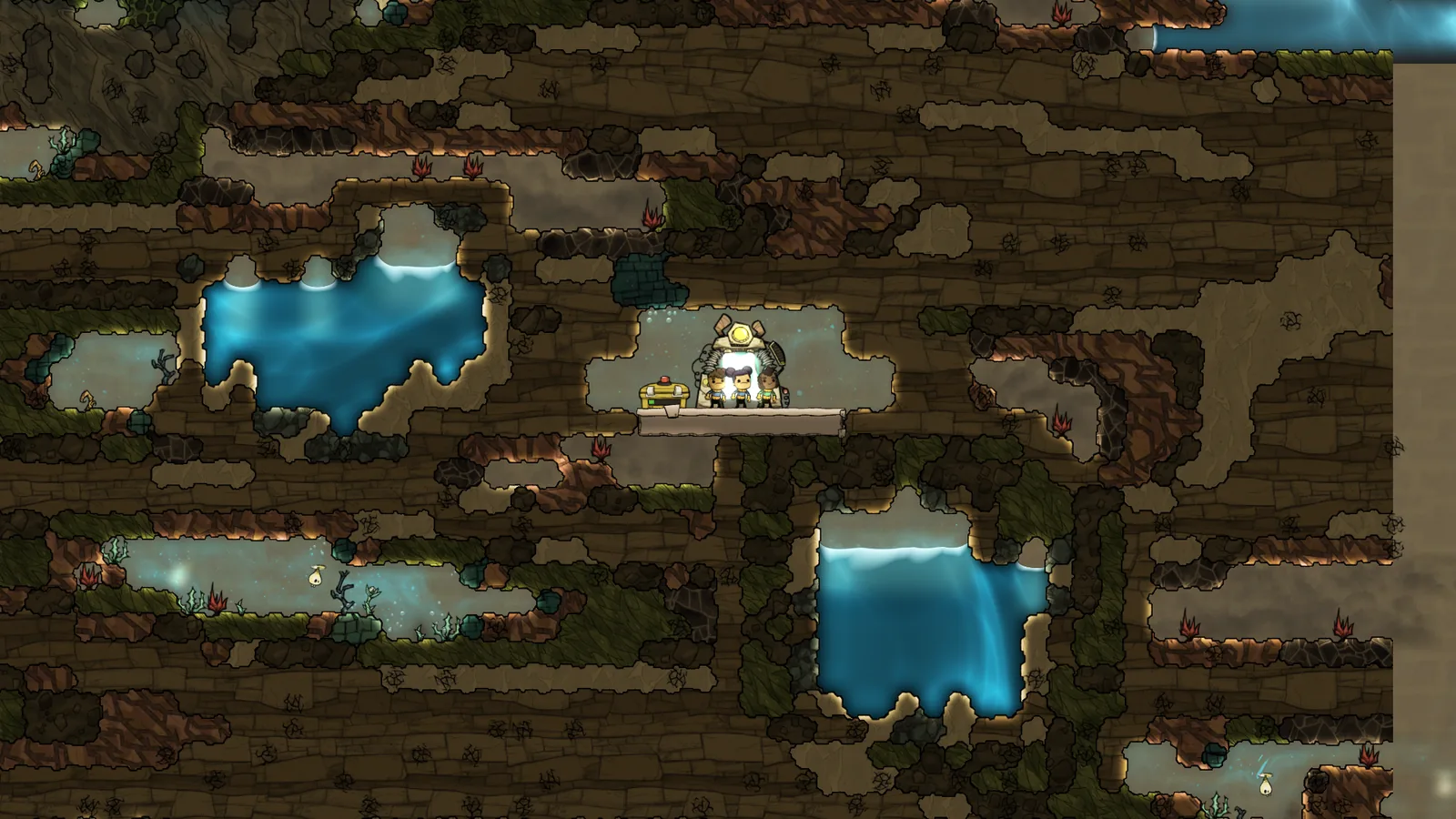
Rime is the cold sandstone start. Every biome on it runs colder than its Terra version: the marsh is slushy, the jungle is frozen, the tundra holds lakes of Liquid Carbon Dioxide and the ocean is partly ice. The game rates it Likely. Cold is a resource here: industry that overheats on other asteroids runs cool on Rime, while farms, ranches and Duplicants need heat you have to make.
| Fact | Value |
|---|---|
| Size | Base game: 256 × 384 cells. Spaced Out! Rime Asteroid: 240 × 380 cells. |
| Survival chance | Likely |
| Where you find it | Base game cluster Rime; Spaced Out! Rime Cluster, next to the Stinko Swamp Asteroid and five outer moonlets. |
| Starting biome | Cold sandstone, rated Mild instead of the Room temperature of Terra. |
| Other biomes | Slushy marsh, frozen jungle, CO2 tundra, slush and frozen oceans, frozen rust and frozen forest, frozen oil field and a magma core with volcano holes. |
| Guaranteed vents | None of the classic jungle or marsh vents are guaranteed. The magma core tries five volcano holes, and up to 12 random geysers follow. |
| World traits | Two to four random traits. |
| Meteor showers | Base game: iron, gold and copper showers. Spaced Out!: copper, ice and slimy showers. |
Strengths
- Cooling is free. Electrolyzers, generators and refineries can sit in cold rock for dozens of cycles before heat becomes a problem.
- Metal is plentiful. Each sample seed holds about 4,000 tonnes of Iron Ore or more, plus Rust and Gold Amalgam.
- Volcano holes in the magma core give large Volcano rolls: the first sample seed has three of them. Later, they are the strongest power source on the map through a Steam Turbine.
- Ice and polluted ice are water you can melt. Ice is a stored water supply that never leaks.
Weaknesses
- Plants grow only inside their temperature window. Mealwood and Bristle Blossom stall in the cold biomes, so the first farm needs a warm room.
- Liquid water is scarce near the start. Water geysers are random rolls, and ice must be melted before it is useful.
- Duplicants in cold rooms get the Chilly Surroundings status, which adds stress. Heat the bedroom and the dining area first.
- The CO2 lakes in the tundra and the frozen oil field are hard to work without heat, insulation and pumps.
What to target first
- Cycle 1: Research Station, Outhouse, Oxygen Diffuser; dig the base inside the sandstone, away from the frozen edges.
- Cycle 1 to 5: Microbe Musher on the start water, and a Mealwood farm in the warmest room you have.
- Cycle 5 to 15: a Space Heater or the waste heat of a Manual Generator room to keep the farm and bedrooms in range.
- Cycle 10 to 30: find the nearest water source on your seed. If none is close, mine ice and melt it in a warm room, or use a Liquid Tepidizer once power allows.
- Cycle 20 to 40: Hatch ranching for coal, then a Coal Generator whose heat goes into the farm.
Surviving Rime
The rule on Rime is to move heat, not remove it. Put every machine that runs hot next to the rooms that need warmth: generators under the farm, the electrolyzer beside the bedrooms. Insulate the base from the frozen biomes with Insulated Tile on the outer walls once you have the research, and keep the cold for industry.
Food needs a plan from cycle 1. Sleet Wheat (Sleet Wheat) grows in the cold and is the natural second crop, but it needs water. Pincha Pepper and other warm crops belong in a heated greenhouse.
Seed S-FRZ-1234567-0-0-0
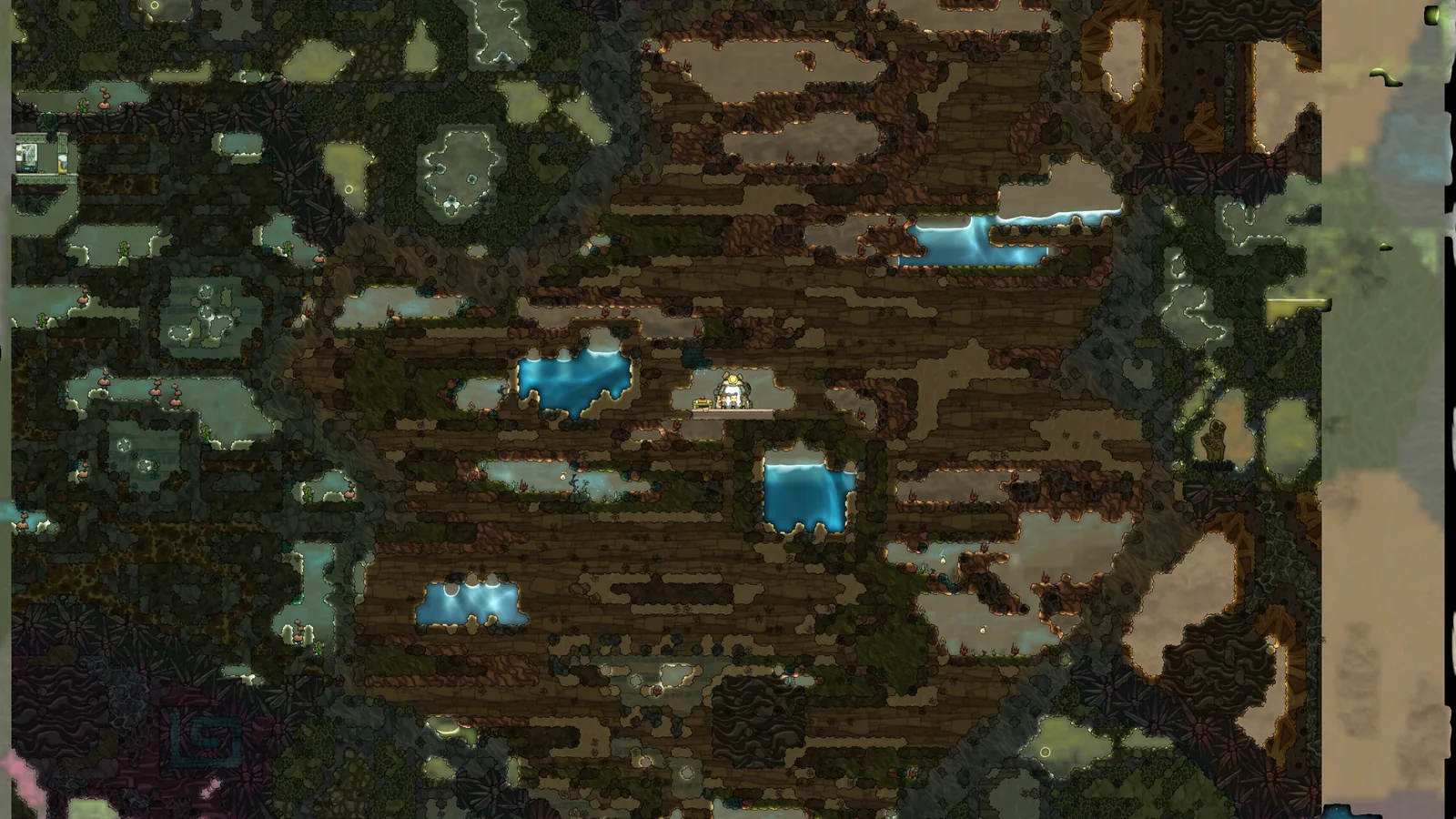
Metal Rich, Trapped Oil, Mixed Boulders and Magma Channels. The metal roll is strong: about 4,100 tonnes of Iron Ore and 2,000 tonnes of Gold Amalgam.
A Natural Gas Geyser sits just 47 cells to the right of the Printing Pod at (148, 169), the earliest power source of the three seeds. The nearest water is the Cool Steam Vent 57 cells above at (83, 231); the Water Geyser at (24, 214) follows.
Three volcano holes rolled a Volcano each. The one at (237, 260) sits next to a Copper Volcano at (223, 292), a natural spot for a combined steam turbine room.
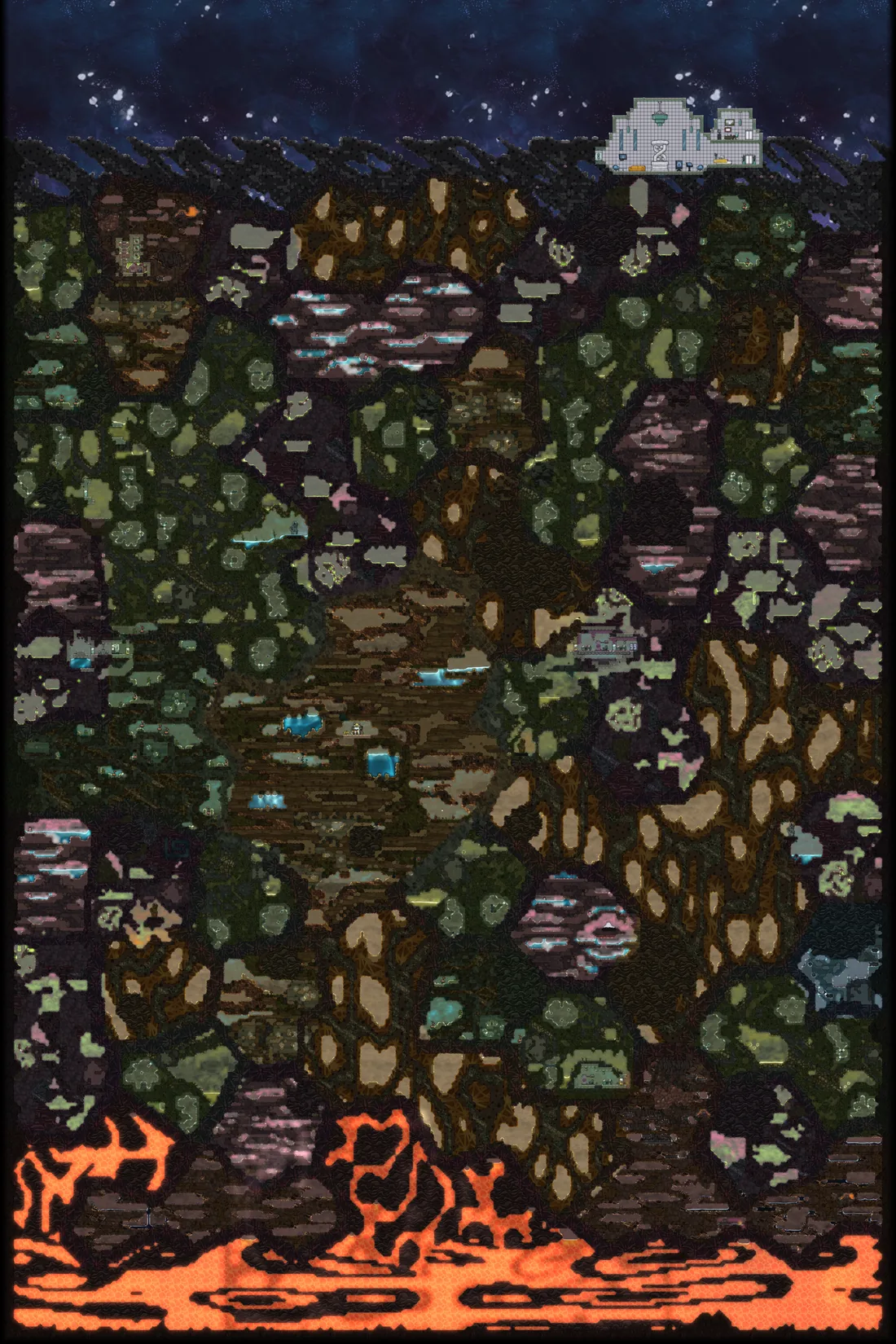
| Geyser | Cell (x, y) | Average output | Temperature |
|---|---|---|---|
| Polluted Water Vent | 176, 223 | 2.96 kg/s | 30 ºC |
| Salt Water Geyser | 173, 119 | 2.84 kg/s | 95 ºC |
| Water Geyser | 24, 214 | 2.25 kg/s | 95 ºC |
| Volcano | 239, 16 | 1.64 kg/s | 1727 ºC |
| Cool Steam Vent | 83, 231 | 1.58 kg/s | 110 ºC |
| Volcano | 237, 260 | 1.47 kg/s | 1727 ºC |
| Cool Steam Vent | 225, 145 | 1.34 kg/s | 110 ºC |
| Volcano | 38, 15 | 1.20 kg/s | 1727 ºC |
| Cool Steam Vent | 211, 291 | 1.16 kg/s | 110 ºC |
| Copper Volcano | 223, 292 | 290 g/s | 2227 ºC |
| Leaky Oil Fissure | 143, 244 | 182 g/s | 327 ºC |
| Carbon Dioxide Geyser | 121, 267 | 160 g/s | -55 ºC |
| Carbon Dioxide Geyser | 230, 179 | 140 g/s | -55 ºC |
| Chlorine Gas Vent | 98, 323 | 115 g/s | 60 ºC |
| Infectious Polluted Oxygen Vent | 193, 270 | 112 g/s | 60 ºC |
| Natural Gas Geyser | 43, 122 | 111 g/s | 150 ºC |
| Natural Gas Geyser | 148, 169 | 108 g/s | 150 ºC |
| Natural Gas Geyser | 205, 308 | 104 g/s | 150 ºC |
| Natural Gas Geyser | 154, 248 | 99 g/s | 150 ºC |
Seed S-FRZ-2468024-0-0-0
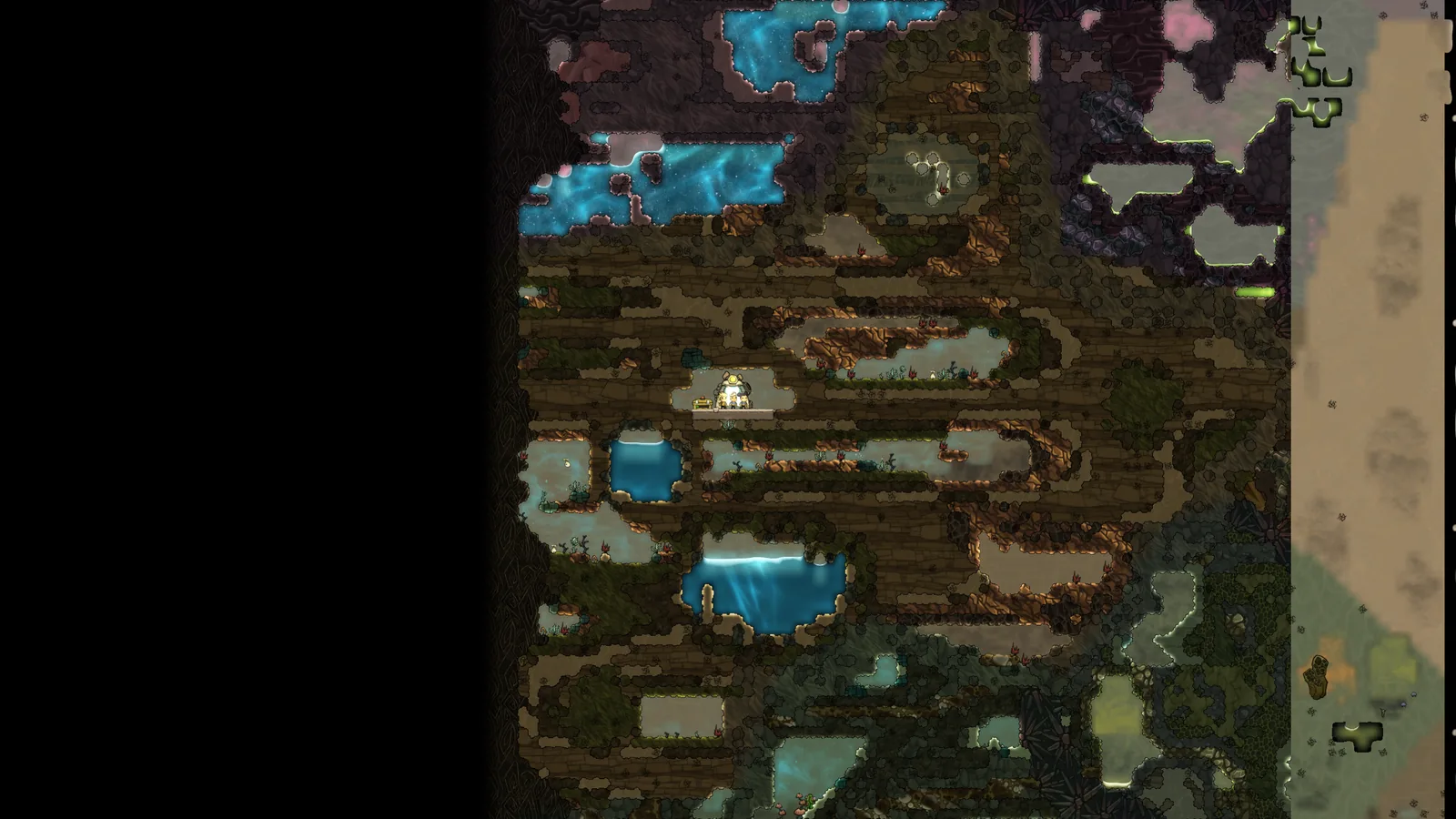
Large Boulders, Subsurface Ocean, Alternate Pod Location and Metal Rich. The pod sits at the far left edge at (24, 255), so most of the map lies to the right and down.
Subsurface Ocean adds a Salt Water sea below the crust: about 3,000 tonnes on this seed. The Salt Water Geyser at (114, 237) is the closest steady liquid. A Minor Volcano sits 57 cells above the pod, close enough to be a hazard.
Large Boulders makes digging slow. Expect the first cycles to cost more dig time than on the other two seeds.
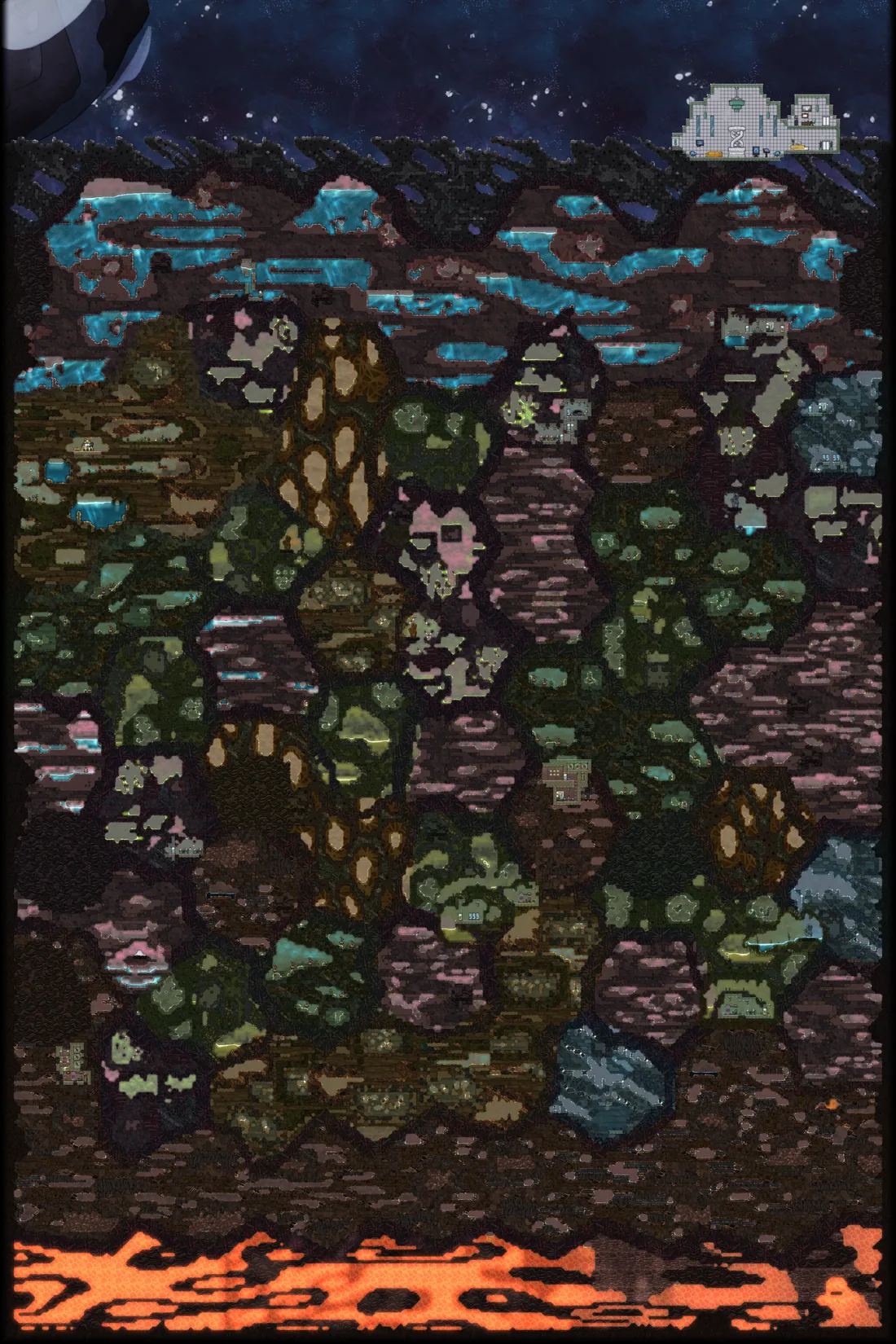
| Geyser | Cell (x, y) | Average output | Temperature |
|---|---|---|---|
| Salt Water Geyser | 39, 111 | 2.91 kg/s | 95 ºC |
| Salt Water Geyser | 114, 237 | 2.75 kg/s | 95 ºC |
| Cool Steam Vent | 209, 239 | 1.63 kg/s | 110 ºC |
| Cool Steam Vent | 230, 116 | 1.34 kg/s | 110 ºC |
| Cool Steam Vent | 80, 125 | 1.21 kg/s | 110 ºC |
| Volcano | 238, 15 | 916 g/s | 1727 ºC |
| Steam Vent | 166, 175 | 704 g/s | 500 ºC |
| Steam Vent | 131, 99 | 687 g/s | 500 ºC |
| Minor Volcano | 45, 308 | 540 g/s | 1727 ºC |
| Iron Volcano | 231, 167 | 334 g/s | 2527 ºC |
| Leaky Oil Fissure | 124, 146 | 240 g/s | 327 ºC |
| Natural Gas Geyser | 81, 227 | 129 g/s | 150 ºC |
| Infectious Polluted Oxygen Vent | 91, 299 | 125 g/s | 60 ºC |
| Natural Gas Geyser | 84, 153 | 122 g/s | 150 ºC |
| Chlorine Gas Vent | 117, 202 | 118 g/s | 60 ºC |
| Hot Polluted Oxygen Vent | 227, 182 | 108 g/s | 500 ºC |
| Carbon Dioxide Vent | 91, 203 | 108 g/s | 500 ºC |
| Infectious Polluted Oxygen Vent | 178, 168 | 93 g/s | 60 ºC |
Seed S-FRZ-31415926-0-0-0
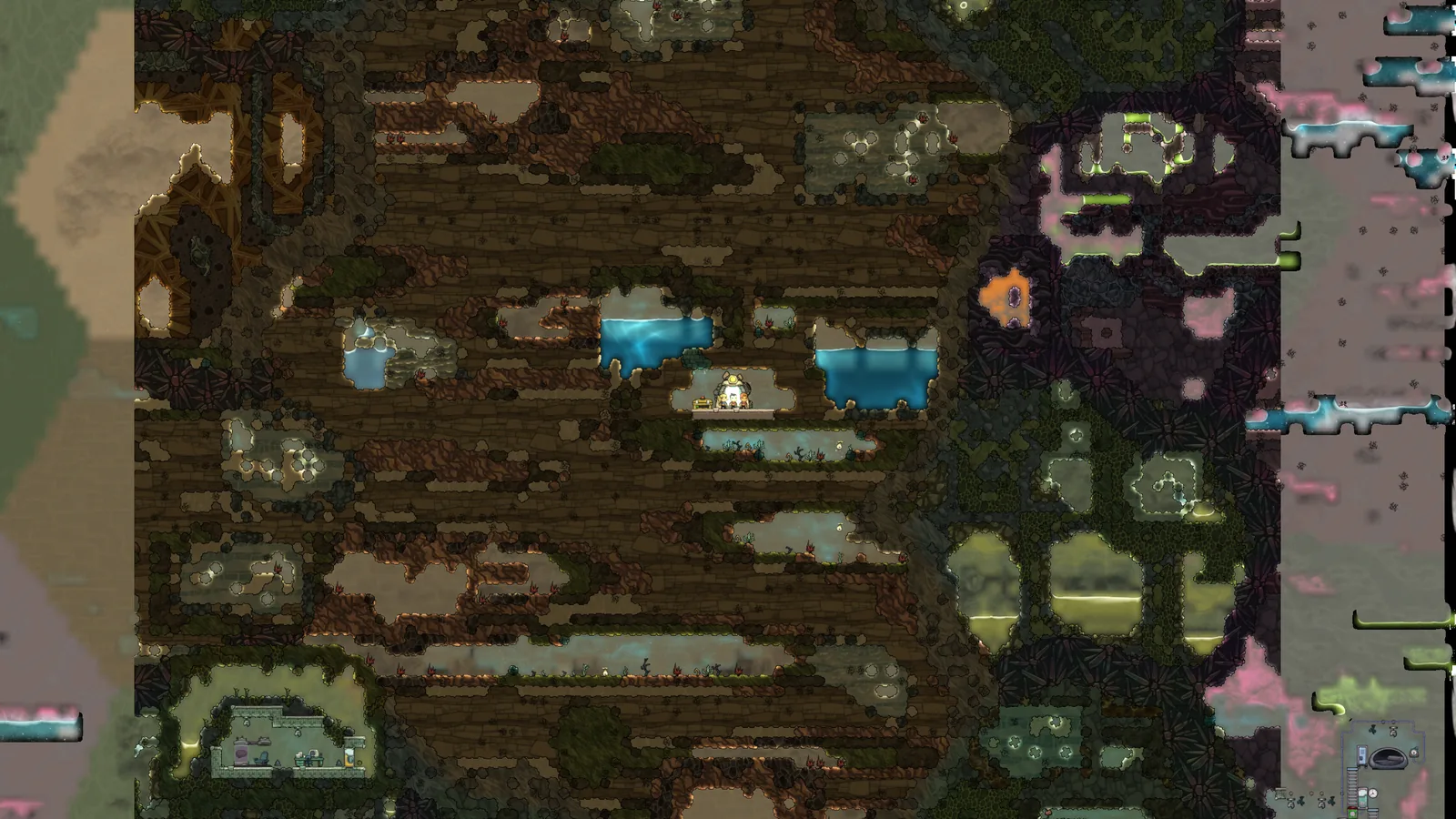
Geodes, Metal Rich, Slime Molds and Frozen Core. Frozen Core replaces part of the hot bottom with ice, which makes this the coldest of the three seeds.
Metal volcanoes are the highlight: two Gold Volcano rolls and a Copper Volcano. The closest liquid is far off; the nearest Cool Steam Vent is 108 cells away at (40, 129).
The Infectious Polluted Oxygen Vent 55 cells from the pod at (154, 156) is the first threat. Seal it early and dig the base in the other direction.
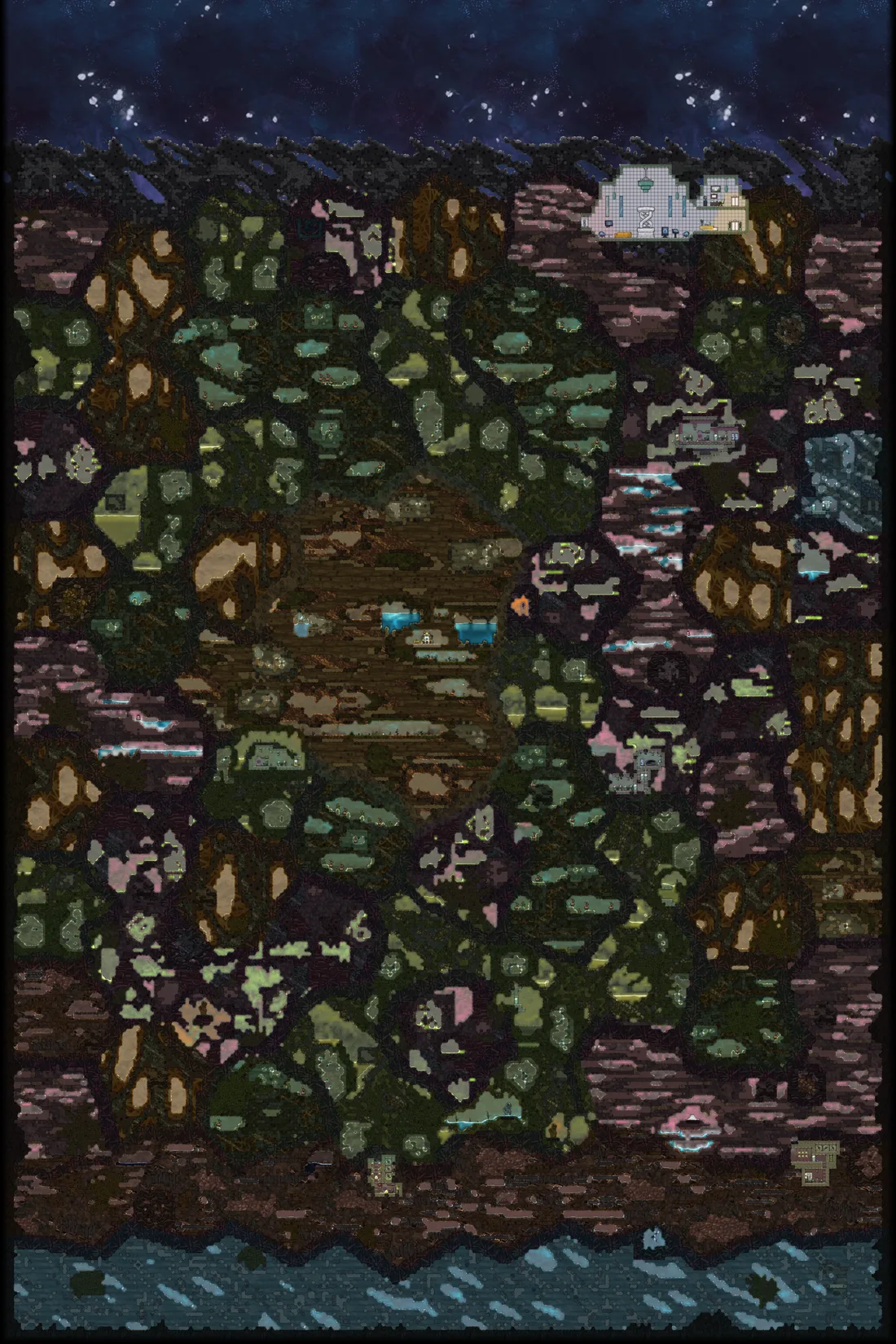
| Geyser | Cell (x, y) | Average output | Temperature |
|---|---|---|---|
| Polluted Water Vent | 218, 72 | 2.96 kg/s | 30 ºC |
| Salt Water Geyser | 197, 64 | 2.70 kg/s | 95 ºC |
| Cool Steam Vent | 144, 65 | 1.55 kg/s | 110 ºC |
| Cool Steam Vent | 227, 226 | 1.40 kg/s | 110 ºC |
| Volcano | 111, 298 | 1.16 kg/s | 1727 ºC |
| Cool Steam Vent | 40, 129 | 1.06 kg/s | 110 ºC |
| Steam Vent | 140, 299 | 853 g/s | 500 ºC |
| Steam Vent | 235, 93 | 729 g/s | 500 ºC |
| Minor Volcano | 58, 127 | 560 g/s | 1727 ºC |
| Copper Volcano | 220, 274 | 353 g/s | 2227 ºC |
| Gold Volcano | 44, 75 | 339 g/s | 2627 ºC |
| Gold Volcano | 197, 234 | 328 g/s | 2627 ºC |
| Natural Gas Geyser | 57, 94 | 128 g/s | 150 ºC |
| Chlorine Gas Vent | 25, 86 | 125 g/s | 60 ºC |
| Infectious Polluted Oxygen Vent | 154, 156 | 117 g/s | 60 ºC |
| Carbon Dioxide Geyser | 71, 275 | 114 g/s | -55 ºC |
| Natural Gas Geyser | 157, 59 | 102 g/s | 150 ºC |
Spaced Out! seed V-SFRZ-C-1234567-0-0-0
The Spaced Out! Rime Asteroid is rated Likely as well. Its teleporter and neighbour, the Stinko Swamp Asteroid, add a warmer world with slime and the metals the cold start lacks. Read the Stinko Swamp Asteroid guide before the first teleport.
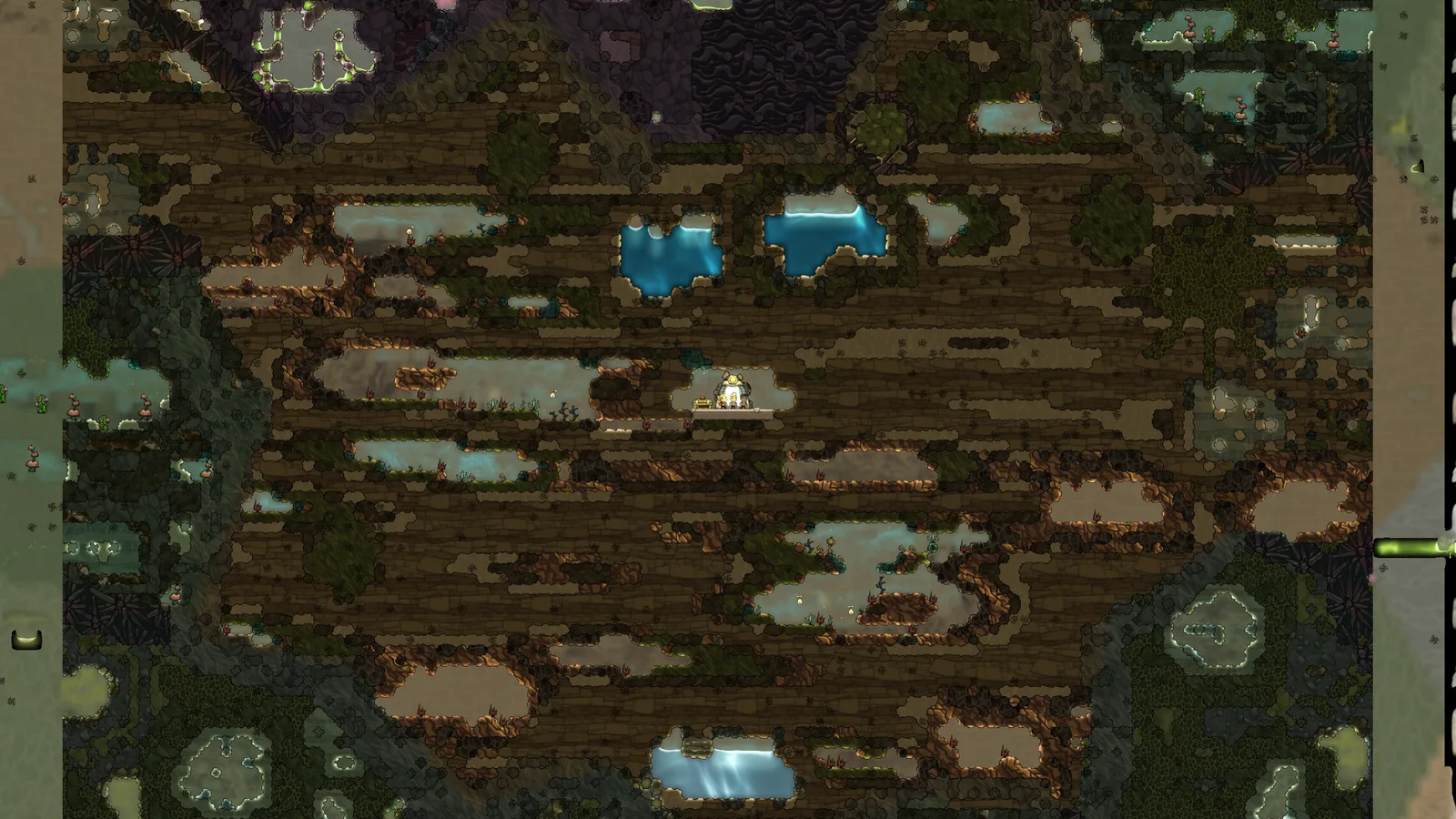
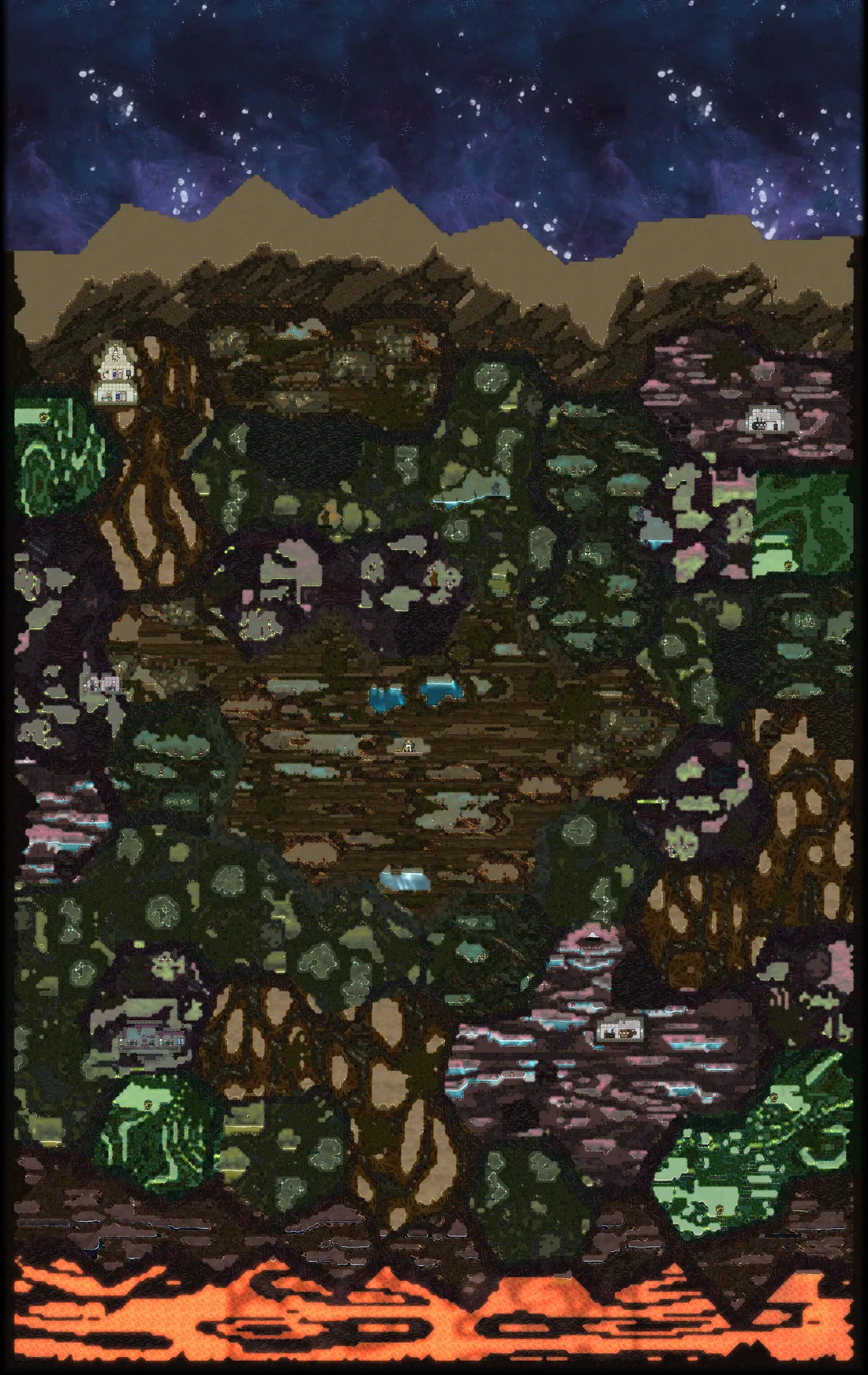
| Geyser | Cell (x, y) | Average output | Temperature |
|---|---|---|---|
| Salt Water Geyser | 163, 121 | 3.95 kg/s | 95 ºC |
| Salt Water Geyser | 99, 94 | 3.17 kg/s | 95 ºC |
| Salt Water Geyser | 17, 243 | 2.56 kg/s | 95 ºC |
| Liquid Sulfur Geyser | 140, 108 | 2.05 kg/s | 165 ºC |
| Cool Steam Vent | 176, 236 | 1.67 kg/s | 110 ºC |
| Cool Steam Vent | 136, 243 | 1.64 kg/s | 110 ºC |
| Cool Slush Geyser | 150, 83 | 1.60 kg/s | -10 ºC |
| Liquid Sulfur Geyser | 17, 141 | 1.59 kg/s | 165 ºC |
| Cool Salt Slush Geyser | 177, 215 | 1.48 kg/s | -10 ºC |
| Cool Slush Geyser | 166, 201 | 1.35 kg/s | -10 ºC |
| Volcano | 25, 16 | 1.25 kg/s | 1727 ºC |
| Volcano | 224, 15 | 1.19 kg/s | 1727 ºC |
| Cool Steam Vent | 187, 262 | 1.09 kg/s | 110 ºC |
| Volcano | 80, 18 | 919 g/s | 1727 ºC |
| Leaky Oil Fissure | 145, 122 | 169 g/s | 327 ºC |
| Infectious Polluted Oxygen Vent | 214, 194 | 127 g/s | 60 ºC |
| Chlorine Gas Vent | 119, 218 | 118 g/s | 60 ºC |
| Carbon Dioxide Vent | 213, 212 | 108 g/s | 500 ºC |
| Natural Gas Geyser | 212, 177 | 106 g/s | 150 ºC |
| Natural Gas Geyser | 89, 235 | 91 g/s | 150 ºC |
Long-term plan
Rime turns into one of the easiest industrial worlds once heat is under control. Tap a volcano for a Steam Turbine, refine the large iron supply into Steel with a Metal Refinery, and let the cold rock absorb the refinery's heat. The frozen ocean and polluted ice give a long water supply as long as you melt them on purpose.