Why is your power circuit failing?
PowerEasy
Separate generation shortages, wire overload and battery reserve before changing your grid.
Supply and wire capacity are different limits
A circuit can run out of power because its generators lack fuel, because demand exceeds production, or because stored energy runs out during a pause. Separately, its wire can overload when connected consumers draw too much at once. Adding another generator does not increase the wire’s rating.
| Buildings | Power generation | Size |
|---|---|---|
 Manual Generator Manual Generator | 400 W | 2×2 tiles |
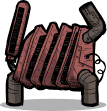 Coal Generator Coal Generator | 600 W | 3×3 tiles |
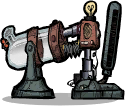 Hydrogen Generator Hydrogen Generator | 800 W | 4×3 tiles |
 Natural Gas Generator Natural Gas Generator | 800 W | 4×3 tiles |
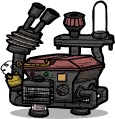 Petroleum Generator Petroleum Generator | 2,000 W | 3×4 tiles |
Budget the simultaneous load
One Electrolyzer and three Gas Pump draw 120 + 3 × 240 = 840 W together. One Hydrogen Generator produces 800 W at its rating: a 40 W shortfall during that overlap. Lower pump duty cycles can reduce average consumption, while the peak remains 840 W. Cooling, water delivery and other equipment add their own loads.
| Buildings | Power use |
|---|---|
 Electrolyzer Electrolyzer | 120 W |
 Gas Pump Gas Pump | 240 W |
 Liquid Pump Liquid Pump | 240 W |
 Thermo Aquatuner Thermo Aquatuner | 1,200 W |
Store energy, not watts
Power is a rate; a battery stores energy. With no charging and ignoring battery losses, 20 kJ supplies a 120 W load for about 166.7 seconds, or 0.278 cycles. A partially charged battery lasts less. Include self-discharge and the actual charging gaps when deciding whether the reserve is sufficient.
Check each branch
A Power Transformer transfers up to 1,000 W and a Large Power Transformer up to 4,000 W. That transfer limit is not permission to put 4,000 W through a lower-rated wire. Compare each branch’s simultaneous draw with its weakest wire, and budget the Thermo Aquatuner separately if its 1,200 W load changes the result.