Oceania asteroid guide: salt water, pacu and example seeds
AsteroidsEasy
How to turn an ocean world into water, oxygen and food, with three in-game seeds and every geyser located.
Oceania starts like Terra, in a sandstone pocket in the middle of the map, but most of the asteroid around it is a Salt Water sea. The game rates it Probable. Each of the three sample seeds below holds about 9,000 tonnes of Salt Water, close to 300 wild Pacu and about 100 Pokeshell. Fresh water, not food, is the resource you have to engineer.
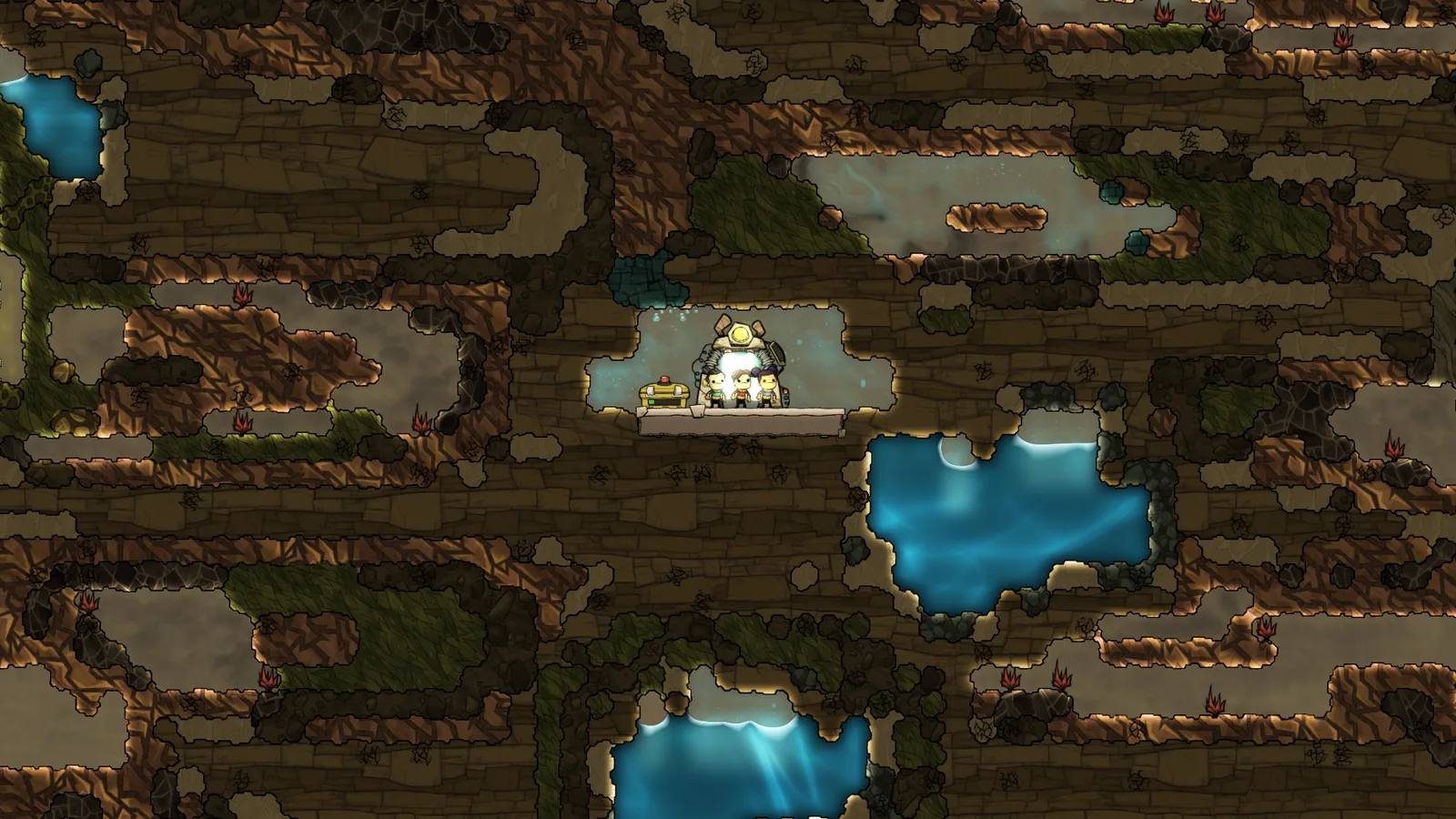
| Fact | Value |
|---|---|
| Size | Base game: 256 × 384 cells. Spaced Out! Oceania Asteroid: 240 × 380 cells. |
| Survival chance | Probable |
| Where you find it | Base game cluster Oceania; Spaced Out! Oceania Cluster, next to the Glowood Wasteland Asteroid and five outer moonlets. |
| Starting biome | Sandstone, as on Terra. |
| Other biomes | At least ten ocean pockets and a deep ocean, swamp, marsh, jungle, tundra, oil field and magma core. |
| World traits | Two to four random traits. The game does not guarantee the steam, gas or salt water vents here; they are rolled. |
| Meteor showers | Base game: iron, gold and copper showers. Spaced Out!: copper, ice and slimy showers. |
Strengths
- Food swims. Hundreds of Pacu live in the sea, and Waterweed grows wild in the salt water pockets.
- Salt Water is liquid you already own. A Desalinator turns it into Water and Salt, and the Rock Crusher grinds that Salt into Table Salt.
- Granite and sedimentary rock make up most of the solid mass, so building material is never short.
- The Metal Rich trait rolled on all three sample seeds, and copper and gold amalgam sit near the start.
Weaknesses
- Digging into an ocean pocket floods the corridor. Open the sea only where you want the water to go, and keep pumps or a sealed reservoir ready.
- Fresh water is limited until a Desalinator runs. Early water comes from the small fresh pockets and from purifying polluted water.
- Swamps and marshes bring Slime and slimelung close to the base.
- Nothing on the asteroid is guaranteed: steam vents, natural gas and the ocean's salt water geyser are all rolls, so one seed can be far poorer than another.
What to target first
- Cycle 1: Research Station, an Outhouse and a Oxygen Diffuser on the start algae.
- Cycle 1 to 5: Microbe Musher and Mealwood. Keep the fresh water pockets for the musher and the wash basin.
- Cycle 5 to 15: research the Liquid Pump, build one and wall in one salt water pocket as a reservoir before you dig further.
- Cycle 10 to 25: a Desalinator feeding an Electrolyzer. Salt Water becomes the colony's oxygen.
- Cycle 20 to 40: ranch Pacu with a Fish Feeder, or harvest Waterweed for a food that needs no fertilizer.
Surviving Oceania
Treat every blue cell on the map as pressure behind a wall. A single dug tile under an ocean pocket drains tonnes of salt water into your base, and wet floors stress Duplicants. Expand sideways through the sandstone first, and when you need a pocket, pump it into a sealed tank instead of breaking it open.
Desalination costs power. Put the Desalinator next to the salt water source, take the salt out regularly, and plan power for it before the colony grows past eight Duplicants.
Seed OCAN-A-1234567-0-0-0
Metal Rich, Trapped Oil, Mixed Boulders and Magma Channels. Trapped Oil means most of the Crude Oil needs an Oil Well; Magma Channels bring Magma up into the mantle, so dig carefully below the start.
Water comes early on this seed: a Polluted Water Vent sits 46 cells away at (93, 128) and gives 2.7 kg/s of polluted water for a Water Sieve. Four Salt Water Geysers add more than 12 kg/s.
The Minor Volcano at (79, 58) and the three Natural Gas Geysers all sit on the left side within 80 cells, a compact power corner for later.
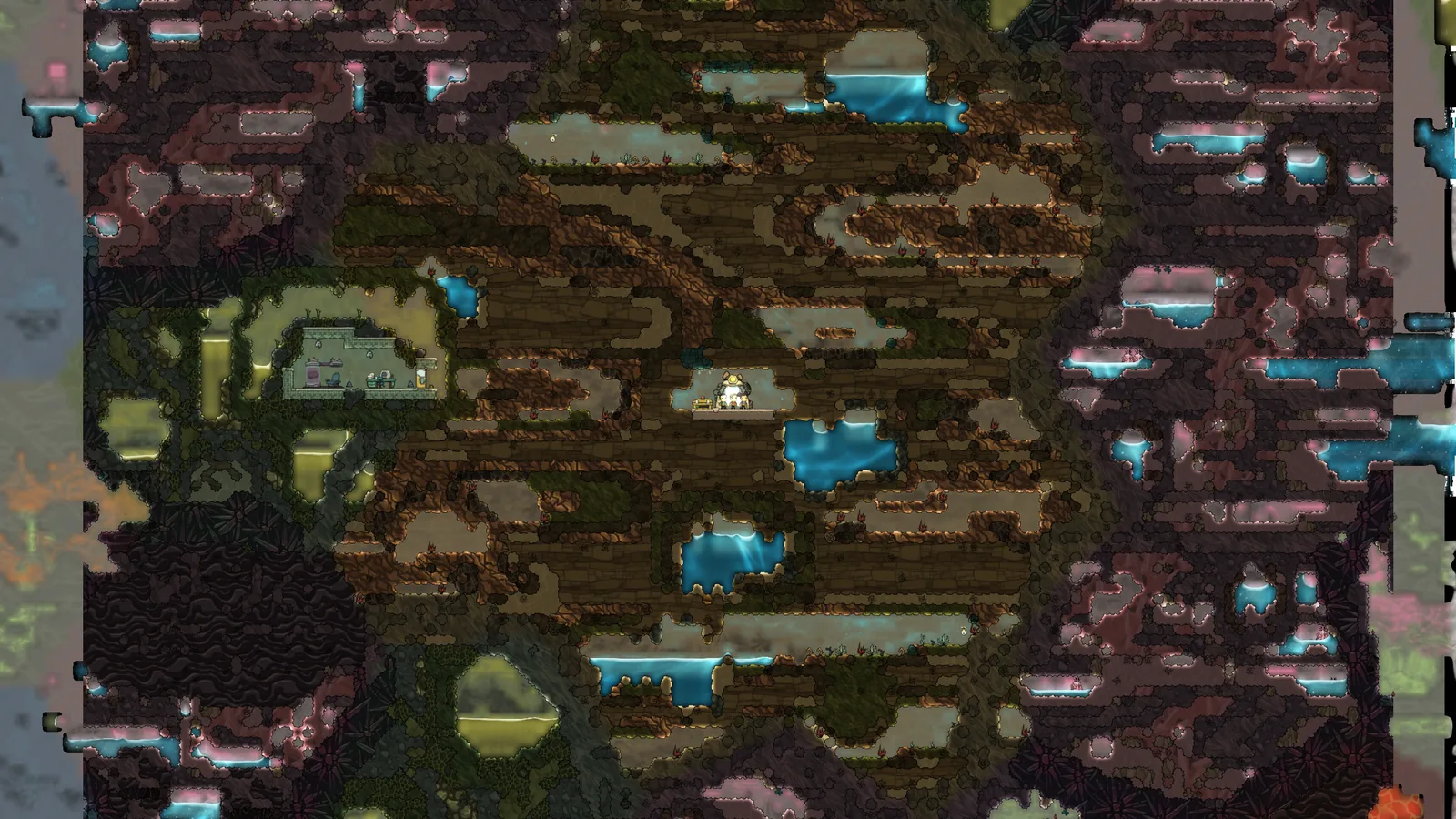
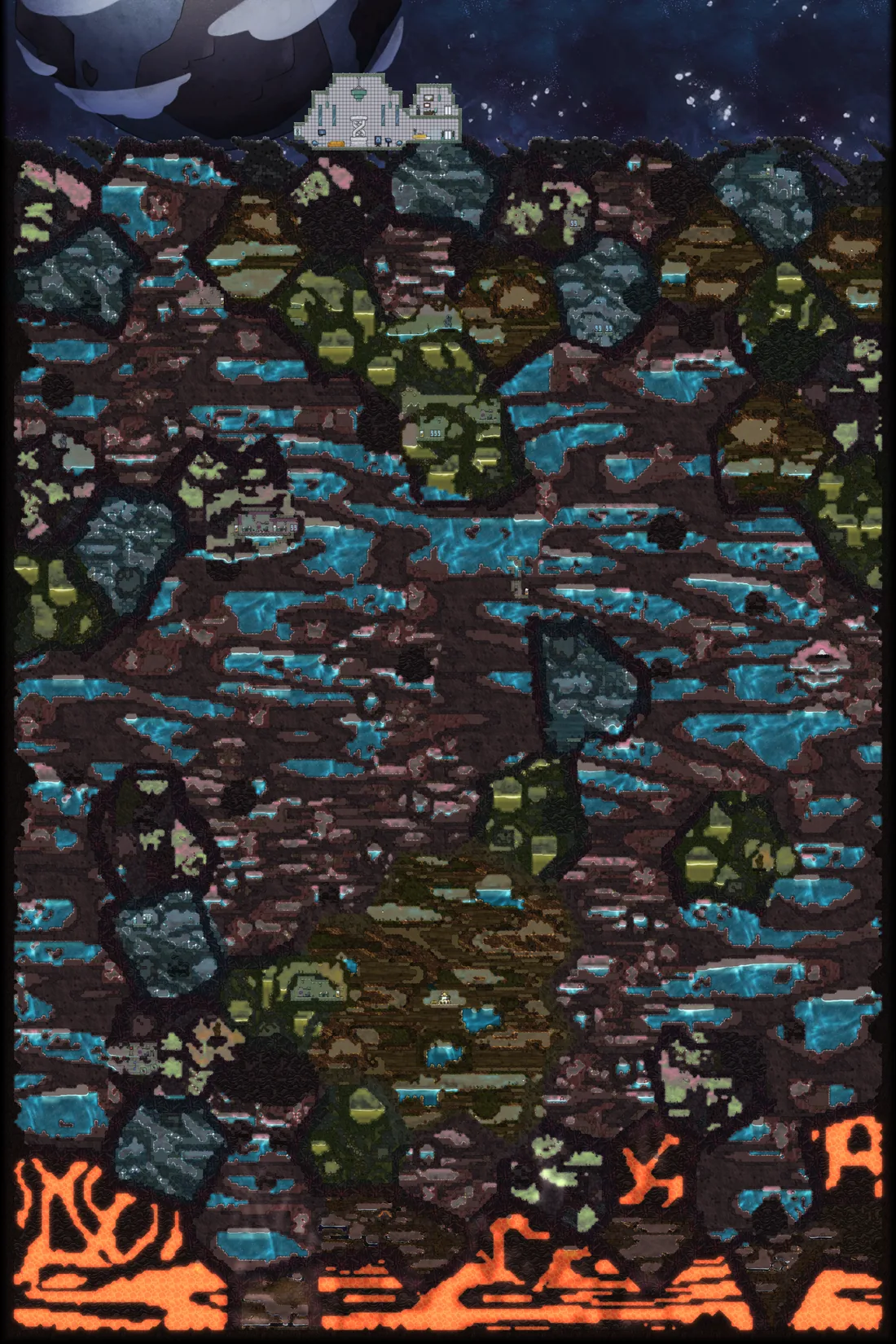
| Geyser | Cell (x, y) | Average output | Temperature |
|---|---|---|---|
| Salt Water Geyser | 215, 211 | 3.30 kg/s | 95 ºC |
| Salt Water Geyser | 234, 197 | 3.19 kg/s | 95 ºC |
| Salt Water Geyser | 226, 89 | 3.13 kg/s | 95 ºC |
| Polluted Water Vent | 93, 128 | 2.73 kg/s | 30 ºC |
| Salt Water Geyser | 188, 192 | 2.61 kg/s | 95 ºC |
| Cool Steam Vent | 127, 290 | 1.71 kg/s | 110 ºC |
| Cool Steam Vent | 17, 256 | 1.61 kg/s | 110 ºC |
| Cool Steam Vent | 25, 297 | 1.21 kg/s | 110 ºC |
| Cool Steam Vent | 40, 150 | 1.21 kg/s | 110 ºC |
| Minor Volcano | 79, 58 | 574 g/s | 1727 ºC |
| Iron Volcano | 20, 162 | 352 g/s | 2527 ºC |
| Natural Gas Geyser | 61, 88 | 119 g/s | 150 ºC |
| Natural Gas Geyser | 50, 107 | 113 g/s | 150 ºC |
| Infectious Polluted Oxygen Vent | 148, 47 | 112 g/s | 60 ºC |
| Carbon Dioxide Vent | 75, 47 | 110 g/s | 500 ºC |
| Natural Gas Geyser | 216, 136 | 110 g/s | 150 ºC |
| Hot Polluted Oxygen Vent | 68, 60 | 106 g/s | 500 ºC |
Seed OCAN-A-2468024-0-0-0
Large Boulders, Subsurface Ocean, Alternate Pod Location and Metal Rich. Alternate Pod Location moved the Printing Pod to the left at (70, 155), so half the map lies to the right.
A Volcano sits only 51 cells away at (120, 147). It is a threat in the first cycles and a heat source for a Steam Turbine later; leave it sealed until you can handle the magma.
This seed also holds one Water Geyser, two Polluted Water Vent rolls, a Gold Volcano and a Copper Volcano, one of the stronger metal rolls in this guide.
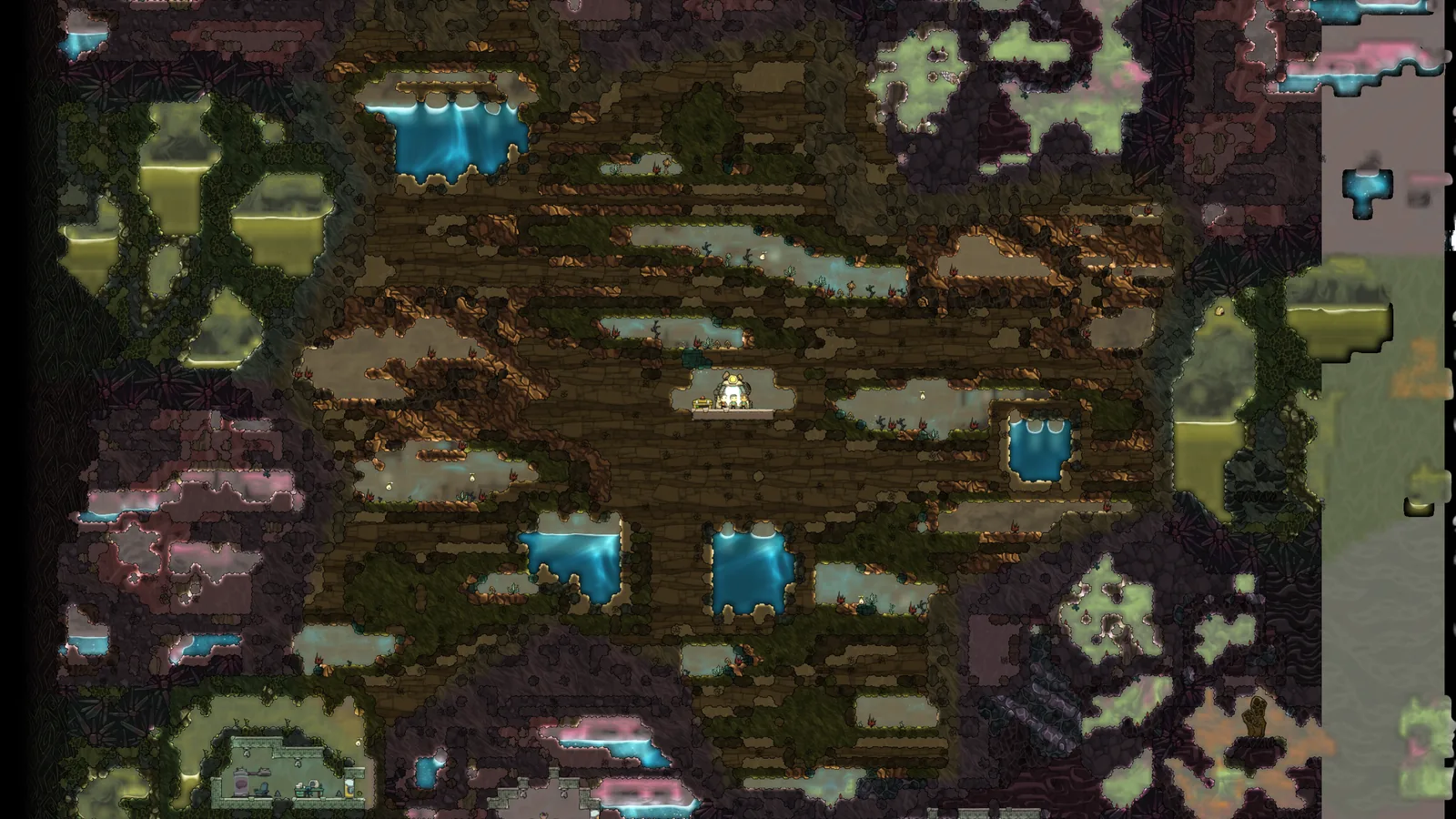
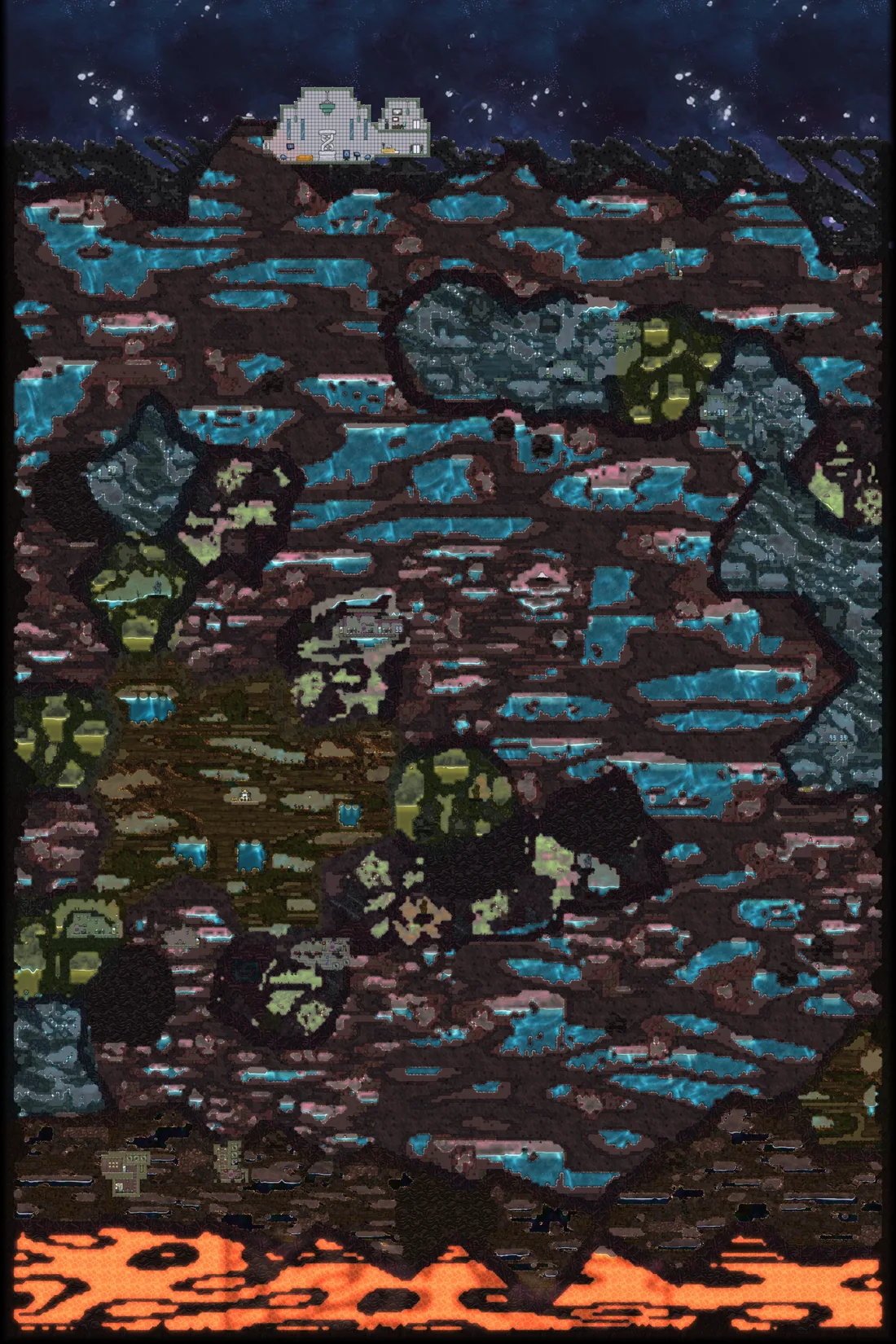
| Geyser | Cell (x, y) | Average output | Temperature |
|---|---|---|---|
| Water Geyser | 154, 256 | 3.15 kg/s | 95 ºC |
| Salt Water Geyser | 154, 219 | 3.04 kg/s | 95 ºC |
| Polluted Water Vent | 234, 113 | 2.80 kg/s | 30 ºC |
| Salt Water Geyser | 77, 274 | 2.75 kg/s | 95 ºC |
| Polluted Water Vent | 74, 250 | 2.48 kg/s | 30 ºC |
| Cool Steam Vent | 44, 214 | 1.52 kg/s | 110 ºC |
| Cool Steam Vent | 167, 136 | 1.45 kg/s | 110 ºC |
| Volcano | 120, 147 | 1.15 kg/s | 1727 ºC |
| Volcano | 192, 52 | 890 g/s | 1727 ºC |
| Steam Vent | 110, 298 | 552 g/s | 500 ºC |
| Gold Volcano | 175, 91 | 389 g/s | 2627 ºC |
| Copper Volcano | 224, 105 | 317 g/s | 2227 ºC |
| Leaky Oil Fissure | 143, 261 | 232 g/s | 327 ºC |
| Carbon Dioxide Geyser | 226, 288 | 168 g/s | -55 ºC |
| Carbon Dioxide Geyser | 78, 57 | 160 g/s | -55 ºC |
| Natural Gas Geyser | 120, 123 | 119 g/s | 150 ºC |
| Natural Gas Geyser | 135, 156 | 116 g/s | 150 ºC |
Seed OCAN-A-31415926-0-0-0
Geodes, Metal Rich, Slime Molds and Frozen Core. The Frozen Core trait replaces part of the magma bottom with Ice, which makes the lower map a cooling resource instead of a heat source.
The Cool Steam Vent 55 cells away at (84, 81) and the Cool Salt Slush Geyser at (68, 134) give two different liquids within reach of the start. Two Iron Volcano rolls cover iron for the whole game.
Slime Molds spreads Slime across the map, so put the base's first door between you and the swamp early.
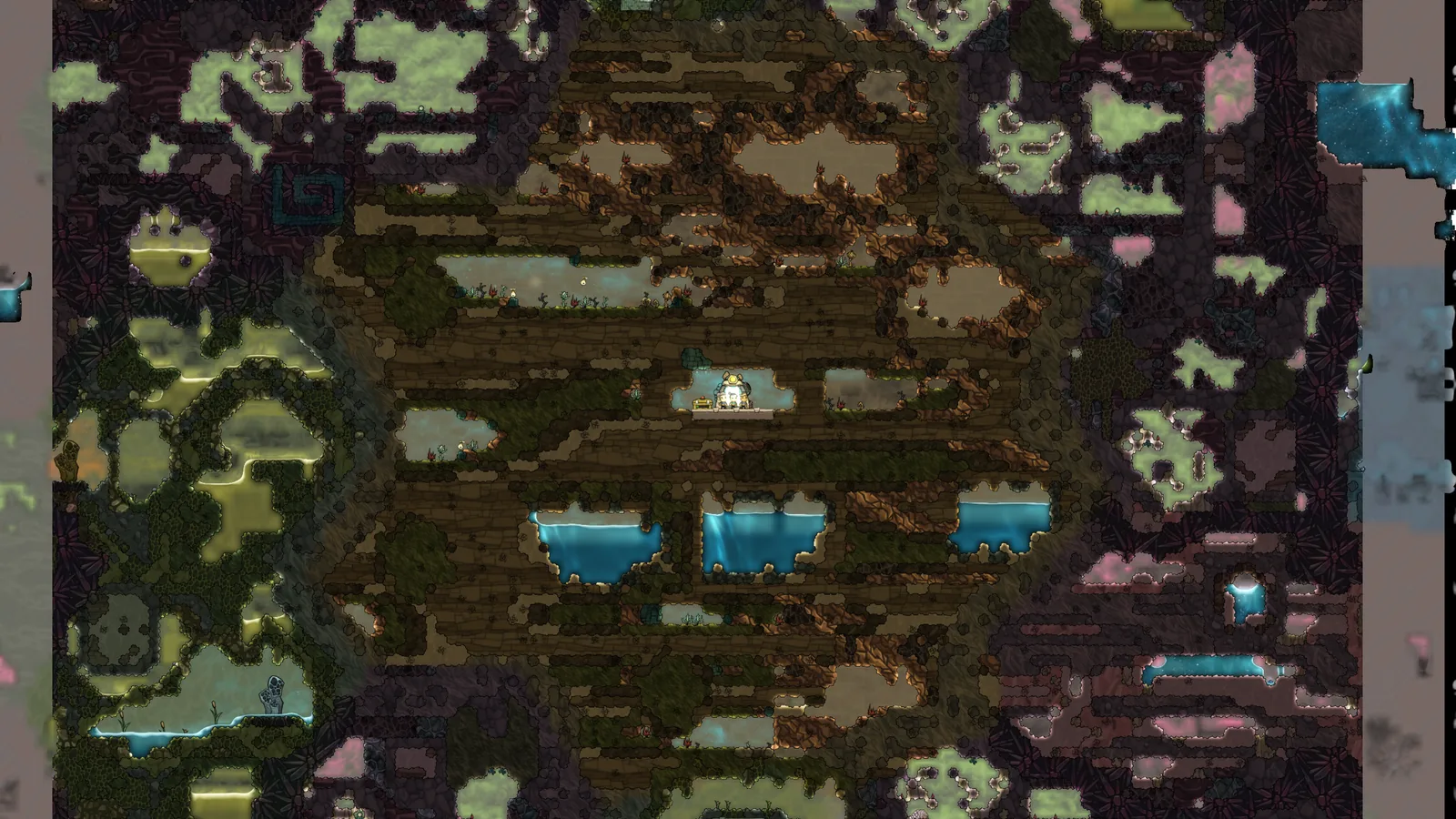
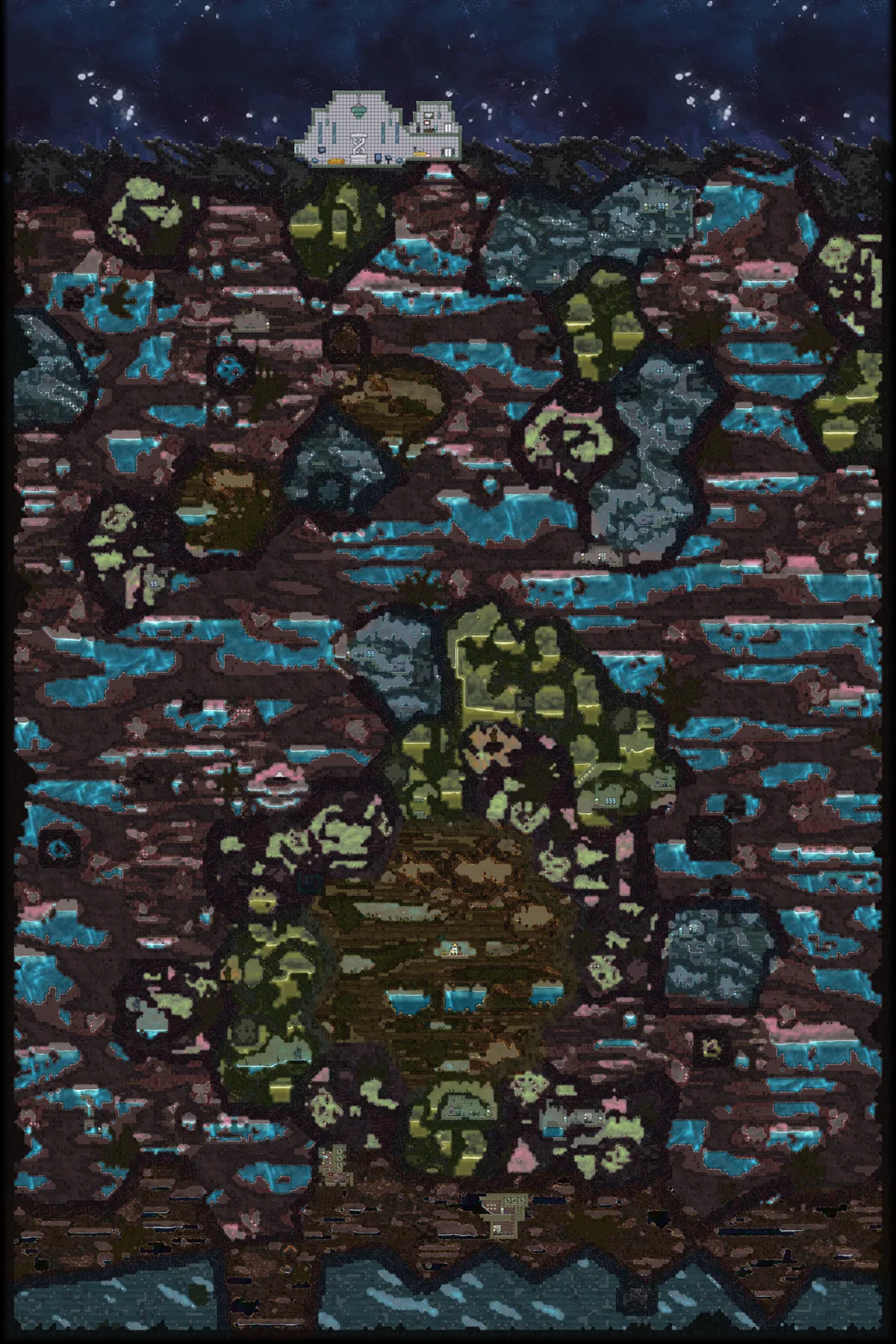
| Geyser | Cell (x, y) | Average output | Temperature |
|---|---|---|---|
| Salt Water Geyser | 79, 162 | 3.17 kg/s | 95 ºC |
| Water Geyser | 121, 31 | 2.66 kg/s | 95 ºC |
| Polluted Water Vent | 26, 285 | 2.58 kg/s | 30 ºC |
| Cool Salt Slush Geyser | 40, 162 | 1.82 kg/s | -10 ºC |
| Cool Salt Slush Geyser | 68, 134 | 1.82 kg/s | -10 ºC |
| Cool Steam Vent | 84, 81 | 1.64 kg/s | 110 ºC |
| Cool Steam Vent | 38, 95 | 1.53 kg/s | 110 ºC |
| Steam Vent | 185, 53 | 607 g/s | 500 ºC |
| Minor Volcano | 179, 272 | 569 g/s | 1727 ºC |
| Iron Volcano | 20, 298 | 321 g/s | 2527 ºC |
| Iron Volcano | 209, 153 | 308 g/s | 2527 ºC |
| Leaky Oil Fissure | 46, 299 | 202 g/s | 327 ºC |
| Natural Gas Geyser | 140, 172 | 115 g/s | 150 ºC |
| Hydrogen Vent | 54, 183 | 114 g/s | 500 ºC |
| Natural Gas Geyser | 64, 104 | 109 g/s | 150 ºC |
| Hot Polluted Oxygen Vent | 155, 285 | 106 g/s | 500 ºC |
| Chlorine Gas Vent | 205, 130 | 93 g/s | 60 ºC |
Spaced Out! seed V-OCAN-C-1234567-0-0-0
In Spaced Out! the game rates the Oceania Cluster Probable, second only to the Terra Cluster among the classic-style starts. Its teleporter leads to the Glowood Wasteland Asteroid, a forest and wasteland world that covers wood and the metals the ocean world is short of. Read the Glowood Wasteland Asteroid guide before the first teleport.
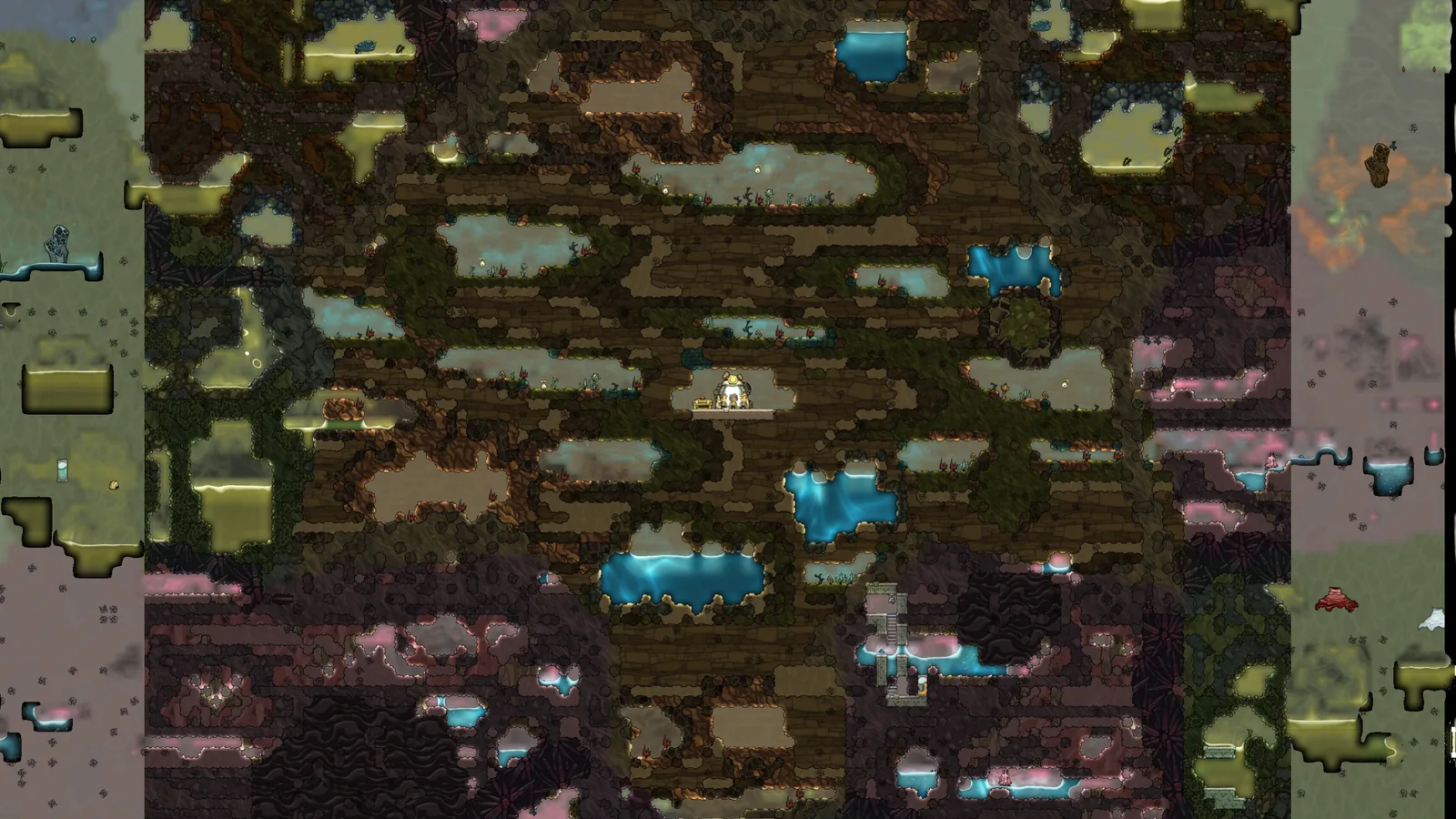
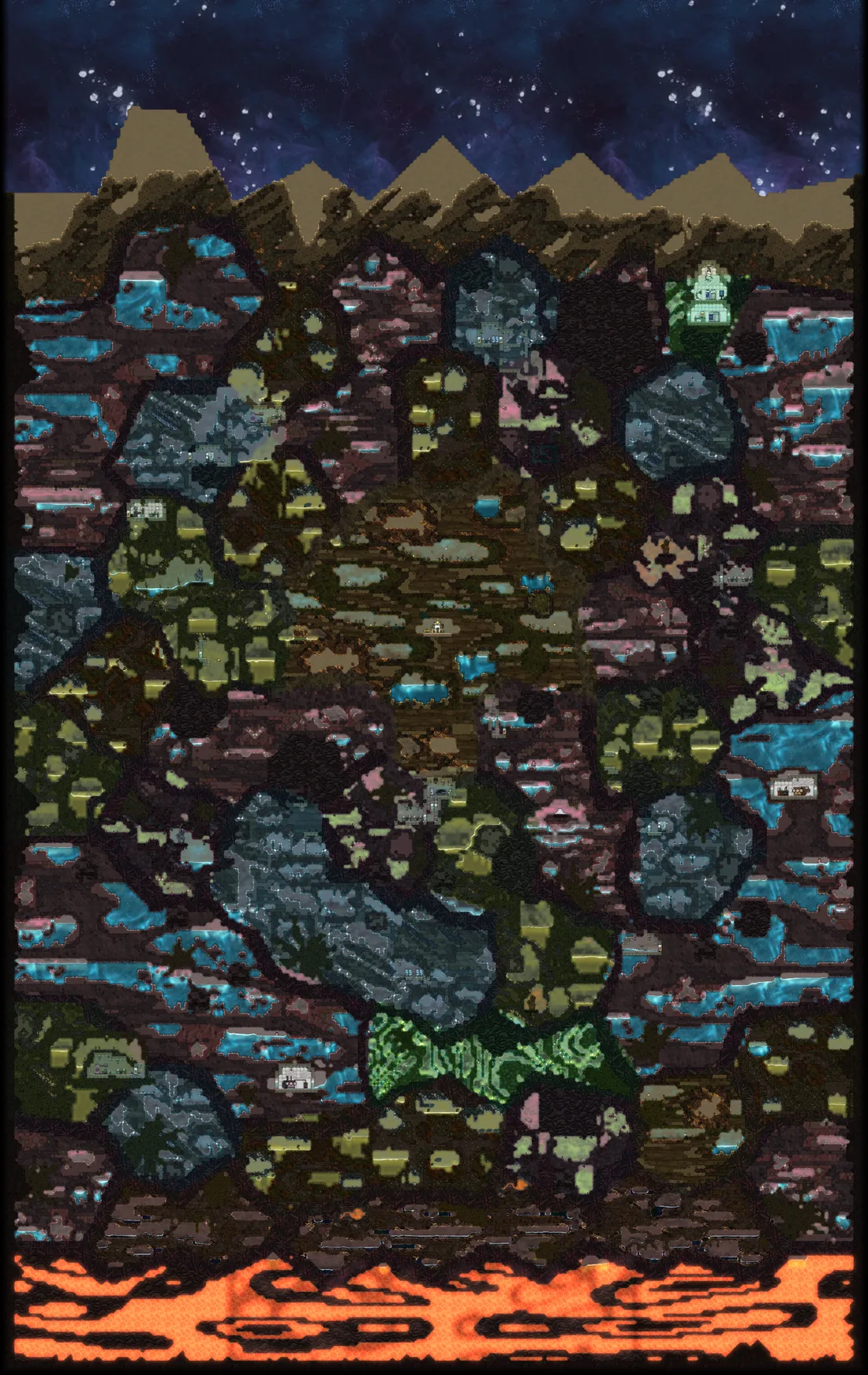
| Geyser | Cell (x, y) | Average output | Temperature |
|---|---|---|---|
| Salt Water Geyser | 154, 155 | 3.13 kg/s | 95 ºC |
| Water Geyser | 155, 53 | 2.74 kg/s | 95 ºC |
| Water Geyser | 179, 186 | 2.70 kg/s | 95 ºC |
| Salt Water Geyser | 189, 184 | 2.61 kg/s | 95 ºC |
| Cool Steam Vent | 49, 147 | 1.53 kg/s | 110 ºC |
| Cool Salt Slush Geyser | 122, 136 | 1.31 kg/s | -10 ºC |
| Cool Steam Vent | 54, 219 | 995 g/s | 110 ºC |
| Steam Vent | 23, 139 | 722 g/s | 500 ºC |
| Minor Volcano | 211, 185 | 581 g/s | 1727 ºC |
| Minor Volcano | 48, 126 | 554 g/s | 1727 ºC |
| Aluminum Volcano | 65, 110 | 352 g/s | 1727 ºC |
| Cobalt Volcano | 194, 117 | 309 g/s | 2227 ºC |
| Aluminum Volcano | 104, 138 | 262 g/s | 1727 ºC |
| Natural Gas Geyser | 183, 227 | 119 g/s | 150 ºC |
| Carbon Dioxide Vent | 54, 103 | 107 g/s | 500 ºC |
| Natural Gas Geyser | 146, 101 | 99 g/s | 150 ºC |
| Hot Polluted Oxygen Vent | 200, 206 | 90 g/s | 500 ºC |
Long-term plan
Oceania scales through water. Desalinated water feeds electrolyzers for oxygen, and the hydrogen they make powers a Hydrogen Generator. Once that loop runs, drain the oceans in a controlled way into large tanks: the dry caves you get are the best base space on the map, and the stored salt water is decades of supply.